Strata Motor
Choosing a Beverage Dispensing Motor manufacturer is not just a price comparison. The motor must deliver steady flow through repeated cycles, fit the pump housing, and tolerate heat, moisture, and cleaning routines. A small mismatch can show up as a noisy countertop unit, uneven pours, or early wear. Real-world testing matters.
The U.S. Department of Energy’s 2014 Improving Motor and Drive System Performance sourcebook estimates that motor-driven systems account for about 54% of electricity use in U.S. manufacturing. That figure is not beverage-specific, but it explains why efficiency, controls, and operating life deserve attention. For buyers, useful checks include rated voltage, speed, torque, duty cycle, noise, sealing, and documented endurance tests. Ask for test conditions, not only a catalog claim. Details matter.
A credible comparison should also examine production capacity, quality-control records, customization, and after-sales support. This article will assess manufacturers through those practical criteria, rather than treating “best” as a universal label. One reliability note: without a traceable interview or publication, I cannot responsibly assign a quotation to a named Beverage Dispensing Motor expert. A sourced expert comment should be verified before publication. That gap matters. Manufacturer datasheets and independent test evidence can help fill it, though neither replaces field experience.
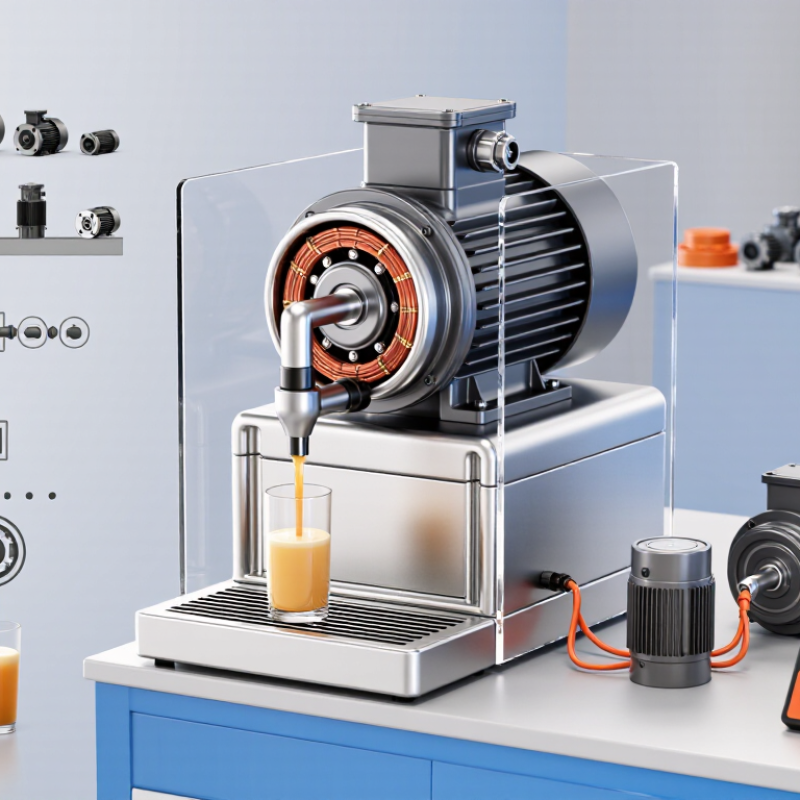
A beverage dispensing motor converts electrical power into rotation that moves a pump, turns an auger, or opens a dispensing mechanism. In a countertop dispenser, a small geared motor may drive rollers that compress flexible tubing, pushing liquid toward the nozzle without bringing the motor into contact with the drink. Other designs use a motor to rotate a valve or feed powdered ingredients. Small details matter.
A controller starts the motor when a button is pressed or a sensor detects a cup. It may run for a set time or stop after a measured volume, depending on the dispenser’s design. Gear reduction helps provide steady torque at a lower speed, which can improve portion control. Not always. Flow also changes with liquid thickness, temperature, tubing wear, and nozzle condition, so calibration matters. If a motor hums but no drink comes out, check for an empty supply, a kinked tube, or a blockage before assuming the motor has failed. For equipment selection, compare operating voltage, torque, speed, duty cycle, and expected cleaning conditions. The awkward part is that a motor can meet its specification and still perform poorly in a poorly matched pump.
Beverage dispensing motors work behind the counter in coffee brewers, soda fountains, juice dispensers, vending machines, and ice makers. They drive pumps, mixers, augers, and cooling fans. In a coffee unit, a small motor may move water through a pump; in a vending machine, another turns a spiral to release a bottle. Small parts matter. The National Restaurant Association’s 2024 State of the Restaurant Industry projected U.S. restaurant sales at $1.1 trillion, illustrating the scale of food-service settings where dispensing equipment operates.
Motors also serve self-service stations in hotels, offices, hospitals, and convenience stores. USDA Economic Research Service data show that food away from home accounted for 58.5% of U.S. food expenditures in 2022. That figure describes dining habits, not motor sales, but it helps explain why reliable dispensing equipment matters across many venues.
A motor must handle repeated starts, spills, heat, and long operating hours. Quiet operation matters near customers. So does easy cleaning. A common design trade-off is speed versus control: a fast pump may shorten service time, yet deliver uneven portions.
The right choice depends on the drink, duty cycle, and maintenance access; there is no universal best motor. A cramped service panel can still make a sound design frustrating to repair.
A reliable beverage dispensing motor should deliver steady torque across repeated pours. Pump loads can change with liquid viscosity, tubing wear, and rising back pressure. Consistency matters more. Speed control helps keep portions predictable, while an encoder or other feedback method can reveal missed steps and uneven rotation. Gearbox quality also matters: excessive backlash may cause delayed starts or inconsistent valve timing. A motor can look strong on paper and still disappoint.
Thermal management deserves close attention. Repeated dispensing cycles can heat a compact motor, so check its rated duty cycle and temperature rise under realistic loads. The motor’s enclosure should suit the machine’s cleaning conditions, and electrical protection should match the equipment design. Noise tells a story. Grinding or a sudden pitch change may point to poor alignment or wear, though sound alone cannot diagnose a fault. Test with the actual pump, tubing, and beverage range. Record portion variation, temperature, current draw, and restart behavior over many cycles. Even careful tests can miss real-world surprises. That is why long-run trials matter.
| Technical Dimension | What a Reliable Design Should Provide | How to Evaluate It | Why It Matters in Beverage Dispensing |
|---|---|---|---|
| Motor type and operating profile | The motor type should suit the dispenser’s required speed, torque, direction control, noise level, and operating pattern. Brushed DC, brushless DC, and geared motor assemblies each have different design and control considerations. | Compare the motor datasheet and application test results with the actual load, start frequency, run time, and required direction of rotation. | A motor that is poorly matched to the pump or valve load may stall, overheat, or deliver inconsistent dispensing performance. |
| Rated voltage and current | Rated electrical values should be clearly specified for the intended supply. The design should operate within its stated voltage range without exceeding the limits of the motor, driver, or power supply. | Check the datasheet and measure operating current at the intended voltage and representative load, including startup and stall conditions where appropriate. | Electrical compatibility helps prevent unreliable starts, excessive heating, and overloads in the dispenser’s control system. |
| Torque and speed under load | Published torque and speed data should describe the operating conditions, not just unloaded performance. The required output should be available across the dispenser’s normal load range. | Request torque-speed curves or documented operating-point data. Test the assembled pump or mechanism with the actual fluid path and expected load. | Dispensing flow and consistency depend on the complete motor-and-mechanism system; free-running speed alone does not establish performance. |
| Duty cycle and thermal performance | The stated duty rating should match the expected run time, pause intervals, ambient temperature, and enclosure conditions. Thermal protection or a documented temperature limit may be appropriate. | Run the motor through a representative operating cycle and record winding or case temperature using the test method specified by the manufacturer. | Repeated or prolonged dispensing can cause heat buildup, particularly in compact or enclosed equipment. |
| Gearbox and output shaft | Where a gearbox is used, its rated output torque, reduction ratio, allowable shaft load, and operating limits should be specified. The shaft and coupling should suit the pump or actuator. | Inspect the mechanical drawings and verify alignment, coupling fit, backlash where relevant, and performance under the expected load. | Excessive shaft load or poor alignment can accelerate wear, increase noise, and reduce operating life. |
| Ingress protection and cleaning environment | The enclosure and installation should be suitable for the actual exposure to splashes, condensation, dust, and cleaning procedures. An IP rating describes defined ingress-protection tests, not general food safety. | Confirm the specified IP rating and test basis where applicable. Check that the complete installed assembly—not only the motor—matches the equipment’s cleaning environment. | Moisture or cleaning-fluid ingress can damage electrical parts. A rating alone does not confirm suitability for every washdown method or chemical. |
| Materials in the beverage path | Any component that contacts the beverage should use materials suitable for the intended beverage, temperature, and cleaning regime. The motor itself is commonly separated from the wetted path. | Identify every wetted component and request applicable material and food-contact documentation for the destination market and intended use. | Motor performance does not establish that pump, tubing, seals, or other wetted components are suitable for food contact. |
| Noise and vibration | The motor, gearbox, mounting, and driven mechanism should operate without excessive noise or vibration for the dispenser’s use environment. | Measure noise and vibration using a repeatable setup under representative load, mounting, and operating conditions. | Unusual noise or vibration may affect user experience and can indicate imbalance, misalignment, or wear. |
| Control and feedback | For applications requiring accurate positioning, speed regulation, or fault detection, the control system may need feedback such as a Hall sensor, encoder, or current monitoring. | Verify the control interface, feedback signals, response to blocked or abnormal operation, and compatibility with the dispenser controller. | Open-loop control may be adequate for some tasks, while variable loads or precise dosing can require additional feedback and system calibration. |
| Service life and reliability evidence | Service-life claims should identify the test conditions, load, duty cycle, and failure criteria. Replaceable or serviceable components may be useful depending on the equipment design. | Review endurance-test reports and failure records, and compare the test cycle with the expected real-world operating profile. | A life estimate is meaningful only when its conditions are relevant to the intended application. |
| Documentation and quality controls | Technical documentation should include a datasheet, dimensional drawing, wiring details, ratings, revision information, and defined inspection or test procedures. | Check that documents correspond to the supplied motor configuration and that critical specifications are verified through documented production or incoming-inspection checks. | Clear, configuration-specific records make design integration, troubleshooting, and repeat purchasing more reliable. |
Selection criteria depend on the dispenser design, beverage, operating cycle, cleaning method, and destination-market requirements. Verify specifications and compliance for the complete dispensing assembly before production use.
China Best Beverage Dispensing Motor Manufacturer?
China’s beverage dispensing motor industry is structured around component makers, motor specialists, module suppliers, and equipment manufacturers. Upstream suppliers provide copper wire, steel laminations, shafts, bearings, magnets, and electronic controls. Motor factories turn these parts into compact AC or DC drives, often tailored for a machine’s speed, torque, and installation space. Some suppliers also assemble gearboxes or pump-drive modules. The boundaries are not always clear.
For buyers, the key difference is how much engineering support a supplier can provide. A motor may run smoothly on a bench yet struggle with repeated starts, vibration, or heat inside a crowded dispenser. Ask for operating data under realistic duty cycles, plus noise and temperature test results. Check how the supplier manages sample approval, production changes, and traceability. These details matter. A neat supplier chart can hide gaps between prototype work and stable volume production; I would not treat a polished catalogue as proof. It is also worth confirming whether the motor maker or the equipment manufacturer owns final system testing, since pumps, gears, and fluid paths affect dispensing performance.
China Best Beverage Dispensing Motor Manufacturer?
How to Evaluate and Select a Chinese Motor Manufacturer?
Selecting a Chinese beverage dispensing motor manufacturer starts with the machine, not the catalogue. Record the required torque, speed range, duty cycle, supply voltage, and available installation space. A motor running short bursts at a counter may behave differently from one operating continuously in a chilled cabinet. Small details matter. The International Energy Agency’s 2011 report, Energy-Efficiency Policy Opportunities for Electric Motor-Driven Systems, estimated these systems used about 46% of global electricity. The figure is broad, but it underlines why efficiency and operating conditions deserve attention.
Ask suppliers for test records tied to the exact motor model, not just general product claims. Check efficiency, temperature rise, noise, vibration, and performance under the intended load. For beverage equipment, also confirm resistance to humidity, cleaning splashes, and repeated start-stop cycles. Request drawings, material specifications, quality-control procedures, and traceability details. Then compare a sample against your own dispenser. A motor that sounds quiet on a bench can become noticeably louder inside a metal housing. I would not treat one passing sample as proof of stable production.
Assess the factory’s ability to keep specifications consistent across batches. Ask how it handles component substitutions, production changes, and failed units. Relevant evidence may include documented quality systems and testing aligned with applicable IEC motor standards. Discuss lead times, minimum order quantities, packaging, and technical support in writing. A polished presentation is useful, but it cannot replace clear test data and direct answers. Some checks take time. That is time well spent.
Suggested evaluation weights for comparing manufacturers. These are planning weights, not market survey results; adjust them to fit your product and sourcing priorities.
Prioritize product fit, quality systems, and reliability testing. Verify specifications, certification documents, sample performance, production capacity, lead times, and total cost directly with each supplier.
It converts electrical power into rotation, driving a pump, auger, or dispensing valve. In a tube pump, rollers squeeze flexible tubing to move liquid toward the nozzle.
Not in every design. With rollers pressing tubing, the motor stays outside the liquid path.
A button or cup sensor can start the motor. The controller may stop it after a set time or measured volume.
Liquid thickness, temperature, worn tubing, and a dirty nozzle can affect flow. Not always predictable.
Check for an empty supply, a kinked tube, or a blocked nozzle. A hum alone does not prove motor failure.
Compare operating voltage, torque, speed, duty cycle, and cleaning conditions. A neat specification sheet can still miss a poor pump match.
An encoder or similar feedback can reveal missed steps and uneven rotation. Gearbox backlash may also delay starts or change valve timing.
Test with the actual pump, tubing, and beverage range over repeated cycles. Record portion variation, temperature, current draw, and restart behavior. Real use may still surprise you.
A Beverage Dispensing Motor is the drive unit that helps control the movement and flow of drinks in dispensing equipment. By converting electrical energy into steady mechanical motion, it can support functions such as pumping, mixing, or operating a dispensing mechanism. These motors are used in a range of beverage systems, including vending machines, countertop dispensers, and commercial drink equipment, where consistent performance and dependable operation are important.
When evaluating a motor, buyers can consider output, speed control, operating noise, durability, energy use, and compatibility with the intended equipment. China’s manufacturing sector includes suppliers with different production capabilities and levels of technical support, so selecting a suitable manufacturer calls for careful comparison. Review product specifications, quality-control processes, customization options, communication, and after-sales service. A clear assessment of both the motor’s requirements and the manufacturer’s capabilities can help identify a reliable solution for a particular dispensing application.
