Strata Motor
In today's fast-paced industrial landscape, choosing the right components for automation is crucial. Servo motors have emerged as a vital choice for many applications. Industry expert Dr. Emily Zhou stated, "Servo motors bring precision and efficiency to automation processes." This highlights their growing importance.
Servo motors excel in providing accurate positional control. They enhance machine performance while optimizing energy use. Many businesses are shifting from traditional motors to servo motors. This transition is driven by the demand for higher precision and better reliability.
However, selecting the right servo motor can be challenging. Factors like torque, speed, and application requirements must be considered. Understanding these variables can significantly impact performance. As technology evolves, continual learning is essential in this field. Adapting to new trends is a necessity for professionals aiming for success in automation.
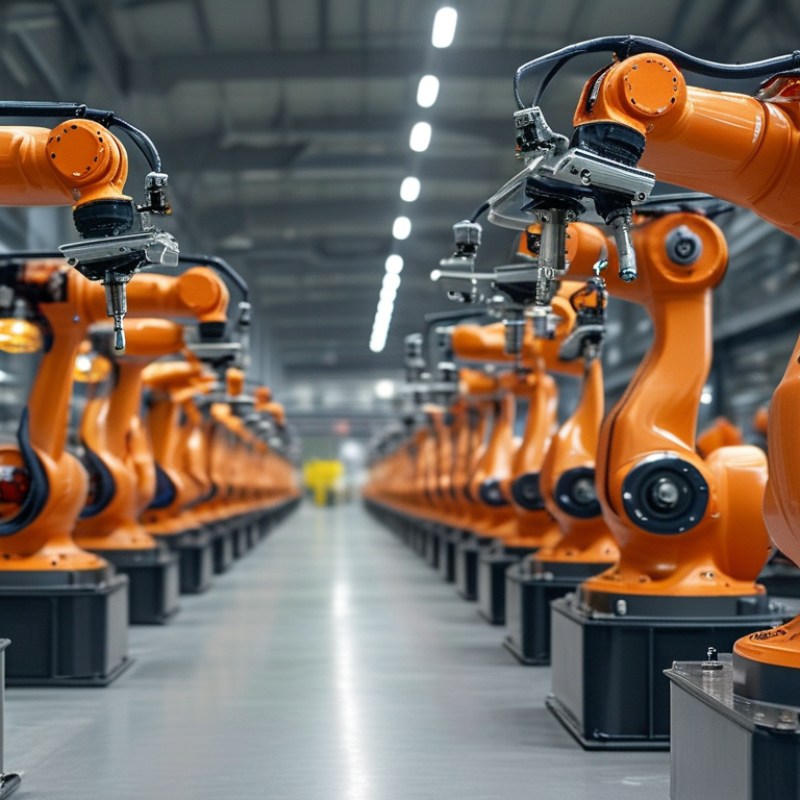
Servo motors are essential components in automation applications. They provide precise control over motion and positioning. Their closed-loop control systems ensure accuracy and reliability. This makes them ideal for tasks requiring consistent performance.
In many cases, servo motors outperform traditional motors. They offer faster response times and better energy efficiency. This is crucial in industries like robotics and manufacturing. However, using servo motors can be complex. Users must understand their parameters, like torque and speed, to select the right motor for a task.
Tips: Always consider the specific application needs. Evaluate the required precision and load capacity. Invest time in learning about motor specifications before making a choice. Regularly review system performance. Minor adjustments can lead to significant operational improvements.
Servo motors are increasingly preferred in automation due to their high precision and efficiency. According to the International Electrotechnical Commission (IEC), servo motors can improve system performance by up to 30% compared to other motor types. This enhancement comes from their superior control over speed, position, and torque. They allow for smoother motion and greater responsiveness, which is essential in applications like robotics and CNC machinery.
Another key advantage is energy efficiency. The U.S. Department of Energy reports that servo motors can consume up to 50% less energy than traditional induction motors in certain applications. This reduction not only lowers operational costs but also supports sustainability initiatives. Additionally, servos often have a longer lifespan, translating to reduced maintenance and replacement expenses over time.
Yet, servo systems can be complex. They require more sophisticated controllers and tuning, which may lead to increased initial investments. However, the long-term benefits often outweigh these upfront costs, especially in high-demand environments. Understanding these trade-offs is vital for making informed decisions in automation projects.
| Advantage | Description | Comparison with Other Motors |
|---|---|---|
| High Precision | Servo motors provide accurate position control and motion tracking. | Stepper motors may lose steps under load, reducing precision. |
| High Efficiency | They offer greater energy efficiency by consuming power only as needed. | Induction motors often run at a constant power consumption. |
| Speed Control | Servo motors allow for rapid and smooth speed variation. | Alternating current motors provide limited speed control. |
| Compact Design | Servo motors are generally smaller in size compared to other motor types. | DC motors can be bulkier for similar torque ratings. |
| Low Maintenance | Fewer mechanical parts lead to lower maintenance requirements. | Brush motors require more regular maintenance due to brush wear. |
Servo motors play a crucial role in various industrial automation applications. They are particularly valued for their precision and control. In robotics, for instance, servo motors enable accurate movement. They allow robots to perform tasks that require high levels of dexterity. This is especially important in manufacturing settings where precision is critical.
Packaging machines also widely use servo motors. These motors help control the speed and position of conveyor belts. This ensures that products are packaged consistently and efficiently. Another area is CNC machining, which relies on servo motors for precise cutting and shaping of materials. The ability to fine-tune the motor's performance enhances the quality of the final product.
Although servo motors bring many benefits, challenges remain. For example, they can be more expensive than other types of motors. The programming required for optimal performance can also be complex. These factors can create a barrier for smaller companies. Understanding the trade-offs is essential for making informed decisions about automation needs. Servo motors may not always be the best fit for every application.
When selecting servo motors for your automation needs, several factors come into play. The application type is crucial. Different tasks require varying precision levels, torque, and speed. For instance, robotics applications often demand higher precision than simple conveyor systems. This variability influences your motor selection significantly.
Another critical aspect is the configuration of the motor. Servo motors come in different sizes and types. Larger motors might provide more power but can be challenging in tighter spaces. Smaller ones may work well in compact setups but could lack power for heavier loads. Considering the physical space and mechanical requirements is essential.
Control mechanisms are also important. Some systems use analog signals, while others rely on digital communication. Understanding your control requirements can prevent compatibility issues later. Lastly, always reflect on the motor's energy efficiency. An efficient motor may offer lower operational costs over time, even if the initial investment is higher. Balancing these factors can lead to a more reliable, effective automation setup.
The landscape of automation is evolving rapidly, with servo motors at the forefront. According to a recent report from MarketsandMarkets, the global servo motor market is projected to reach $13.8 billion by 2025. This growth is driven largely by increasing demand for precise motion control in various applications. Factories are increasingly integrating these sophisticated systems to boost productivity and efficiency.
Future trends indicate that servo motors will continue to integrate advanced technologies like IoT and artificial intelligence. These features enhance their capabilities, allowing for real-time monitoring and predictive maintenance. The ability to analyze data generated by servo systems ensures that manufacturers can maintain optimal performance. However, the dependence on technology could result in challenges, such as cybersecurity risks that require careful management.
Moreover, as industries shift towards sustainability, energy-efficient servo motors are increasingly desirable. A study by Grand View Research indicates that energy-efficient automation solutions could reduce energy consumption by up to 30% in industrial settings. Still, the transition may pose hurdles for companies accustomed to older systems, as retrofitting can be complex and costly. This juncture creates an opportunity for innovation and improvement within the sector.
: Servo motors provide high precision and efficiency, improving performance by up to 30%.
They can consume up to 50% less energy than traditional motors, reducing costs and supporting sustainability.
Consider application type, precision needs, torque, speed, and configuration of the motor.
Yes, they often need sophisticated controllers, which may increase initial costs.
Larger servos may offer more power but can be hard to fit in tight spaces.
Absolutely. An efficient motor can lead to lower operational costs over time.
Yes, they typically last longer, reducing maintenance and replacement costs.
Yes, complexity and initial investment can be higher, but long-term benefits often prevail.
Control types, like analog or digital signals, affect compatibility and functionality.
Understanding specific needs helps in selecting a motor that ensures reliability and effectiveness.
Servo motors play a crucial role in automation applications, offering precision and control that are essential for modern industrial processes. Understanding the fundamentals of servo motors reveals their key advantages, such as high efficiency and accurate positioning, which set them apart from other motor types. Commonly found in robotics, CNC machinery, and conveyor systems, servo motors excel in scenarios that demand reliable performance and responsiveness.
When selecting servo motors for specific needs, factors such as torque requirements, speed, and environmental conditions must be taken into account to ensure optimal performance. As technology advances, trends in servo motor development point towards greater integration with smart systems and increased capabilities, further enhancing their role in automation solutions. This positions servo motors as a vital component for companies looking to improve efficiency and productivity in their operations.
