How to Choose the Best AC Gear Motor from China?

Time:2026-09-24 Author:Mason
0%

Choosing the best AC Gear Motor from China requires more than comparing prices on a supplier website. A suitable motor must match the machine’s load, speed, voltage, duty cycle, and installation space. A small mismatch can cause overheating, unstable torque, or early gearbox wear. These problems often appear after installation, when returns become expensive and inconvenient.

Experienced buyers usually begin with a clear technical requirement sheet. Record the rated power, output speed, reduction ratio, shaft size, mounting position, brake needs, and operating environment. For example, a conveyor running eight hours daily needs different protection and thermal performance than a light-duty packaging device. Ask manufacturers for datasheets, dimensional drawings, noise values, efficiency data, and real test reports. Do not rely only on attractive product photographs.

Supplier evaluation matters just as much. A reliable Chinese manufacturer should explain its winding process, gear materials, lubrication method, inspection steps, and quality controls. Request samples before placing a larger order. Measure noise, temperature rise, starting performance, and output torque under realistic conditions. Factory videos can help, but an independent inspection offers stronger evidence. It may feel slower.

Certifications and export experience also deserve careful review. However, certificates alone cannot prove consistent production quality. Check whether the certificate matches the exact model, factory, and intended market. Discuss packaging, spare parts, warranty terms, lead times, and after-sales communication in writing. No checklist is perfect. Real performance depends on both engineering accuracy and supplier honesty. This guide explains the practical questions, verification methods, and purchasing decisions that help buyers select an AC Gear Motor with greater confidence.
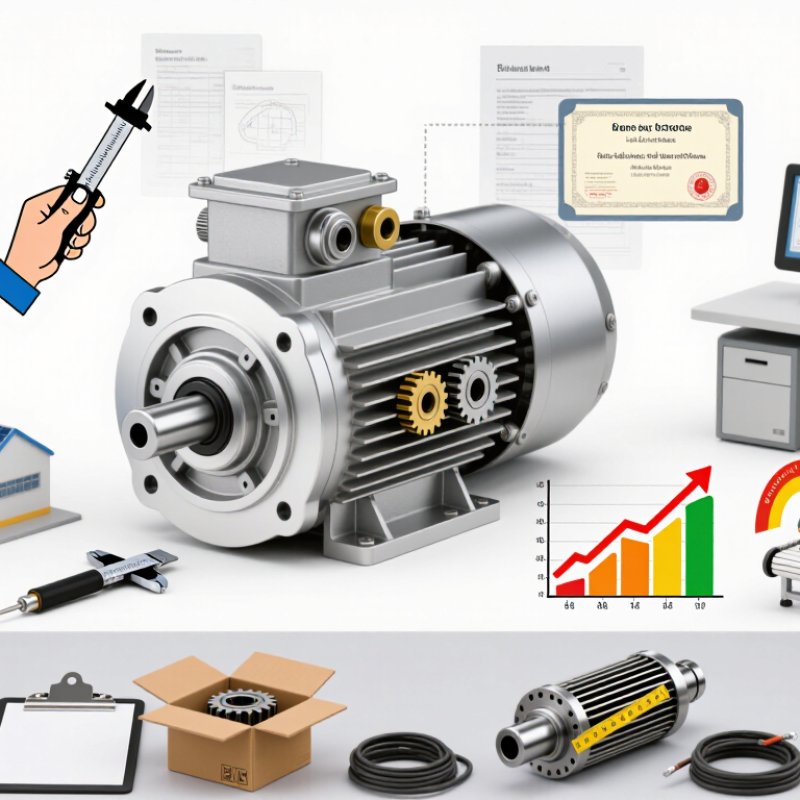
How to Choose the Best AC Gear Motor from China?

Understanding AC Gear Motor Types and Application Requirements

How to Choose the Best AC Gear Motor from China?

Understanding AC Gear Motor Types and Application Requirements

Choosing an AC gear motor starts with the machine, not the supplier. Define required speed, output torque, duty cycle, voltage, frequency, and mounting space. A conveyor running eight hours daily needs different protection from a small positioning device. Record the starting load too. It can exceed the running load several times.

AC induction motors suit steady industrial operation. Synchronous motors offer stable speed when load changes are limited. Reversible motors help equipment move in both directions. Brake motors improve stopping control on lifting or indexing systems. Gearbox selection matters equally. Worm gears are compact and economical, while helical gears usually provide better efficiency. Planetary designs handle higher torque in smaller spaces. The correct choice depends on heat, noise, backlash, and service life.

When evaluating Chinese suppliers, request drawings, motor curves, insulation details, efficiency data, and test records. Ask for a sample under your real load. Check temperature rise after continuous operation, not only during a short demonstration. I have seen buyers focus on rated torque and overlook starting current. That mistake can cause stalling. It is easy to miss. Also verify shaft tolerances, connector quality, IP rating, and spare-part availability. A factory audit or independent inspection adds useful evidence. However, paperwork alone cannot prove long-term reliability. Actual application testing remains the more honest reference.

Matching Motor Specifications to Load, Speed, Torque, and Duty Cycle

How to Choose the Best AC Gear Motor from China?

Choosing an AC gear motor from China starts with the load, not the catalog photo. Measure the actual moving mass, friction, incline, and shock load. Then calculate continuous torque and peak torque separately. Peak torque matters. Use the gearbox ratio to match the required output speed, but check efficiency losses. An undersized motor may run, yet overheat beside a warm conveyor frame. A simple calculation is not enough.

Voltage and frequency must match the installation. Confirm rated current, starting current, insulation class, and allowable temperature rise. For a machine operating eight hours daily, select a motor rated for continuous duty. Intermittent applications may use a lower duty rating, but frequent starts can still create severe thermal stress. Count starts per hour, reversing cycles, and idle periods. These details are easy to overlook.

In field evaluations, the first load estimate is often too optimistic. Allow a realistic service factor, especially with belts, mixers, lifts, or uneven resistance. Ask the Chinese supplier for torque-speed curves, dimensional drawings, protection ratings, noise data, and sample test records. Test one unit under the real voltage and mechanical load before approving a larger order. Check shaft play after repeated starts. It can reveal problems that a short bench test misses.

How to Choose the Best AC Gear Motor from China?

Match the motor to the load torque, output speed, and duty cycle. The reference points below show practical sizing margins for common AC gear motor applications.

Select a motor whose continuous rated torque exceeds the calculated load torque, then verify output speed, starts per hour, overload conditions, and duty classification such as S1 or S3.

Evaluating Chinese Manufacturers, Certifications, and Quality Systems

How to Choose the Best AC Gear Motor from China?

Selecting a Chinese AC gear motor requires more than comparing prices and rated torque. Manufacturer evaluation should begin with documented quality systems, not polished product photographs. ISO 9001 certification can indicate controlled processes, but verify its issuing body, validity, and production scope. A certificate alone proves little.

Ask for batch records, material certificates, and motor test data. Useful measurements include winding resistance, no-load current, output torque, noise, temperature rise, and endurance hours. Request samples from normal production, not specially prepared units. Inspect the gearbox for grease coverage, shaft alignment, seal quality, and abnormal play. Small details matter.

Check market-specific certifications carefully. CE or other marks should match the actual motor model and technical file. RoHS declarations should identify material-control methods, not merely repeat a logo. Independent laboratory reports can strengthen confidence when their test scope is clear. Factory traceability is equally important. Can the supplier link a motor to its components, operators, and test results?

Do not trust perfect paperwork.

A useful factory audit reviews incoming inspection, calibration records, corrective actions, and final testing. Speak with the quality engineer, not only the sales representative. One common mistake is accepting a successful sample as proof of stable production. It is not. Repeat testing after several batches may expose rising noise, inconsistent current, or weak seals. I would also record every promise in the purchase specification, because memory becomes unreliable when problems appear months later.

How to Choose the Best AC Gear Motor from China? - Evaluating Chinese Manufacturers, Certifications, and Quality Systems

Evaluation Dimension Relevant Technical Data or Standard What to Request from the Manufacturer Objective Acceptance Check Recommended Weight
Application and Load Matching Required output torque, speed, duty cycle, starting frequency, ambient temperature, mounting position, and load inertia. Completed technical questionnaire, load profile, motor-sizing calculation, and recommended gear ratio. The selected motor reaches the required speed and torque without exceeding rated current or thermal limits. 20%
Rated Electrical Parameters Rated voltage, frequency, phase, current, power, rated speed, power factor, and starting current. Common industrial supplies include 230/400 V at 50 Hz, but the actual supply must be confirmed. Nameplate drawing, datasheet, wiring diagram, and test report for the specified voltage and frequency. Nameplate values match the purchase specification and the motor operates correctly on the intended power supply. 10%
Gearbox Type and Ratio Helical, worm, bevel, or planetary gearbox; reduction ratio; rated output torque; permissible radial and axial loads; backlash; and service factor. Gearbox drawing, ratio table, torque curve, lubrication specification, and bearing-load data. Output torque and permissible shaft loads exceed application requirements after applying the manufacturer’s service factor. 15%
Efficiency and Energy Performance Motor efficiency classes are defined by IEC 60034-30-1. IE1, IE2, IE3, and IE4 represent increasing efficiency levels for applicable motor designs. Efficiency test report, efficiency class declaration, rated-load efficiency, and no-load or partial-load performance data. The declared efficiency class is supported by test data at the specified voltage, frequency, and rated output. 10%
Operating Duty and Thermal Class IEC 60034-1 defines duty types such as S1 continuous duty. Insulation systems commonly use thermal classes B, F, or H, with maximum hot-spot temperatures of approximately 130°C, 155°C, and 180°C respectively. Duty rating, insulation-class declaration, temperature-rise test, and thermal protection details. The duty rating and insulation system are suitable for the actual operating cycle and ambient conditions. 10%
Ingress Protection IEC 60529 defines IP ratings. The first digit addresses solid-particle protection and the second digit addresses water protection. IP55, for example, indicates dust-protected construction and protection against water jets. IP-rating declaration, enclosure drawing, sealing details, and test evidence where required. The declared IP rating is appropriate for dust, moisture, washdown, and installation conditions. 5%
Product Safety and Market Access CE marking may be required for applicable European Union legislation. RoHS addresses restricted substances. CCC applies to products within China’s compulsory certification catalogue; applicability must be verified for the specific product. EU Declaration of Conformity, applicable test reports, RoHS material declaration, and CCC certificate or written applicability assessment. Documents identify the exact model, applicable legislation, standards used, certificate scope, and issuing organization. 10%
Quality Management System ISO 9001 specifies requirements for a quality management system. Certification is evidence of a certified management system, not automatic proof that every motor is defect-free. Current ISO 9001 certificate, certification scope, validity dates, site address, and latest audit status. The certificate covers the manufacturing site and activities relevant to AC motors or geared motors. 8%
Incoming and Process Quality Control Key controls include copper-wire verification, lamination and shaft inspection, winding resistance, insulation resistance, dielectric-strength testing, dimensional inspection, and gearbox leak testing. Inspection plans, control plans, calibrated-equipment records, sampling procedures, and nonconformance records. Critical characteristics have defined limits, inspection frequency, traceability, and corrective-action procedures. 7%
Routine and Type Testing Typical tests include winding resistance, insulation resistance, dielectric strength, no-load current, vibration, noise, running temperature, and performance testing. IEC 60034-2-1 provides methods for determining motor losses and efficiency. Sample routine-test report, type-test report where applicable, test-equipment calibration certificates, and acceptance-test procedure. Test results are traceable to the production batch and use calibrated instruments with defined acceptance limits. 10%
Reliability, Warranty, and Support Evaluate warranty duration, failure-rate reporting, spare-parts availability, technical response time, repair process, and documented root-cause analysis. Written warranty terms, service-level commitments, spare-parts list, troubleshooting guide, and corrective-action example with sensitive data removed. Commercial terms clearly define coverage, exclusions, response times, replacement procedures, and responsibility for transport costs. 5%
Important: Certification requirements depend on the destination market, product configuration, voltage, and intended application. Always verify certificate validity, scope, issuing body, model coverage, and applicable legal requirements before placing an order.

Comparing Pricing, Customization, Lead Times, and After-Sales Support

Choosing the Best AC Gear Motor from China

Price is important, but the lowest quotation can hide practical costs. In supplier evaluations, I compare the motor’s rated torque, noise level, insulation class, and expected service life. A cheaper unit may require thicker wiring or more frequent replacement.

Ask for a detailed quotation, including tooling, samples, packaging, testing, and shipping terms. Request a sample before placing a large order. It exposes problems early.

Customization can include shaft dimensions, mounting holes, gear ratios, voltage, connectors, and cable length. Clear drawings reduce repeated revisions. Confirm whether custom tooling belongs to you or remains with the factory.

Lead times also need careful checking. A sample may take two weeks, while mass production could require six more. Buffer time matters during peak seasons. It is often overlooked.

After-sales support shows a supplier’s real reliability. Ask how technical issues are documented, how replacement parts are supplied, and who handles warranty claims. A responsive engineer can save days when a motor stalls on an assembly line.

Keep written inspection standards and acceptance limits. I once focused too heavily on unit price and underestimated communication delays. That mistake affected installation planning.

Supplier claims still need verification through samples, factory records, and independent testing when the application is critical. Insist on traceable test reports. Guessing is expensive.

Verifying Samples, Testing Performance, and Finalizing the Purchase

How to Choose the Best AC Gear Motor from China?

Sample verification should begin with the actual operating conditions, not a catalogue promise. Request three identical samples from the same production batch. Record voltage, frequency, rated torque, speed, no-load current, noise, and temperature rise. Run each motor for at least eight hours under representative load. Compare the results. Small differences matter. The IEC 60034-2-1 standard provides recognized methods for testing motor efficiency and losses. Use it when discussing test procedures with the supplier.

Cooling equipment deserves careful efficiency checks. The International Energy Agency reports that space cooling consumes about 10% of global electricity. A motor with excessive friction can increase system energy use and shorten service life. Check gearbox backlash, shaft alignment, starting torque, vibration, and insulation resistance. Ask for test records, calibration dates, material specifications, and a clear tolerance range. Do not accept “tested” without measurable evidence.

Before finalizing the purchase, approve a written sample specification. It should define output speed, torque, noise limits, cable length, connector type, protection rating, and inspection methods. A pre-shipment inspection should test a statistically reasonable quantity, not only one selected unit. I would also confirm packaging through a vibration simulation or drop test. This step is easy to underestimate. My own preference is a small pilot order before mass production, because sample quality can hide process variation. Review corrective actions carefully, and keep every agreed value in the purchase contract.

FAQS

What should I measure before choosing an AC gear motor?

Measure moving mass, friction, incline, and shock loads. Calculate continuous torque and peak torque separately. A catalog image cannot show real resistance.

How do I match motor speed with the machine?

Select a gearbox ratio that reaches the required output speed. Include gearbox efficiency losses. Check the torque-speed curve before approval.

Which electrical details must I confirm?

Match voltage and frequency with the installation. Check rated current, starting current, insulation class, and temperature rise. Wiring may need extra capacity.

How does duty cycle affect motor selection?

Choose continuous-duty equipment for machines running eight hours daily. Count starts, reversals, and idle periods. Frequent starts can create serious heat.

What information should I request from a supplier?

Request drawings, torque-speed curves, protection ratings, noise data, and test records. Ask for calibration dates and measurable tolerances. “Tested” is not enough.

Why should I test samples under real conditions?

Bench testing can miss overheating, vibration, or shaft play. Run identical samples under representative voltage and load. Test for at least eight hours.

How can I compare quotations fairly?

Compare torque, noise, insulation, service life, tooling, packaging, testing, and shipping. The lowest price may increase wiring and replacement costs.

What should a final purchase specification include?

Define speed, torque, noise limits, cable length, connector type, protection rating, and inspection methods. Keep every agreed value in the contract.

How can I reduce production and delivery risks?

Request a pilot order before mass production. Allow buffer time for samples and seasonal delays. My first estimate was too optimistic. Verify corrective actions carefully.

Conclusion

Choosing the best AC Gear Motor from China starts with a clear understanding of your equipment and operating conditions. First, identify the suitable motor type, mounting method, power supply, reduction ratio, and protection level for your application. Then compare key specifications, including load capacity, output speed, starting torque, running torque, operating frequency, and duty cycle. A properly matched motor should deliver stable performance without overheating, excessive noise, or premature wear.

When evaluating Chinese manufacturers, review their production experience, quality control procedures, testing capabilities, and relevant certifications. Compare total value rather than price alone, considering customization options, minimum order quantities, lead times, packaging, warranty terms, and after-sales support. Before finalizing the purchase, request samples and verify actual performance under conditions similar to your application. Testing temperature rise, vibration, noise, efficiency, torque output, and continuous operating stability can help confirm reliability and reduce purchasing risks. Clear technical communication and documented inspection standards are also essential for a successful long-term partnership.

Mason

Mason

Mason is a seasoned marketing professional with a deep expertise in the company's offerings and a passion for driving brand awareness. With a strong background in digital marketing strategies, he has an innate ability to connect with diverse audiences and effectively communicate product benefits.......