Top Variable Speed Motor Manufacturers for Global Buyers

Time:2026-10-19 Author:Sienna
0%

Choosing a Variable Speed Motor is not simply a matter of comparing horsepower and purchase price. Global buyers must examine efficiency, control range, cooling design, enclosure protection, service support, and supply consistency. A motor operating beside a dusty cement line faces different demands from one driving a clean-room conveyor. The details matter.

Motor-systems specialist Aníbal T. de Almeida has stated, “A motor must be evaluated as part of the driven system.” This principle guides our review of leading Variable Speed Motor manufacturers. We consider tested performance, industrial experience, certification practices, warranty clarity, and technical assistance. We also examine how manufacturers handle real installations, including voltage variation, frequent starts, low-speed torque, and harsh ambient temperatures. A polished brochure is not enough.

The ranking is not perfect. Regional data can be incomplete, and factory performance may differ from field results. Buyers should verify current models, local approvals, spare-parts access, and commissioning support before signing a contract. We compare manufacturers through a practical lens: Can the motor maintain stable output at low speed? Does the drive communicate reliably with plant controls? Can technicians obtain bearings, sensors, or replacement drives without long delays? These questions expose weaknesses that marketing language often hides. Our goal is a dependable starting point for engineers, distributors, and procurement teams seeking the right Variable Speed Motor for demanding global applications. Reliable selection requires evidence, not assumptions.
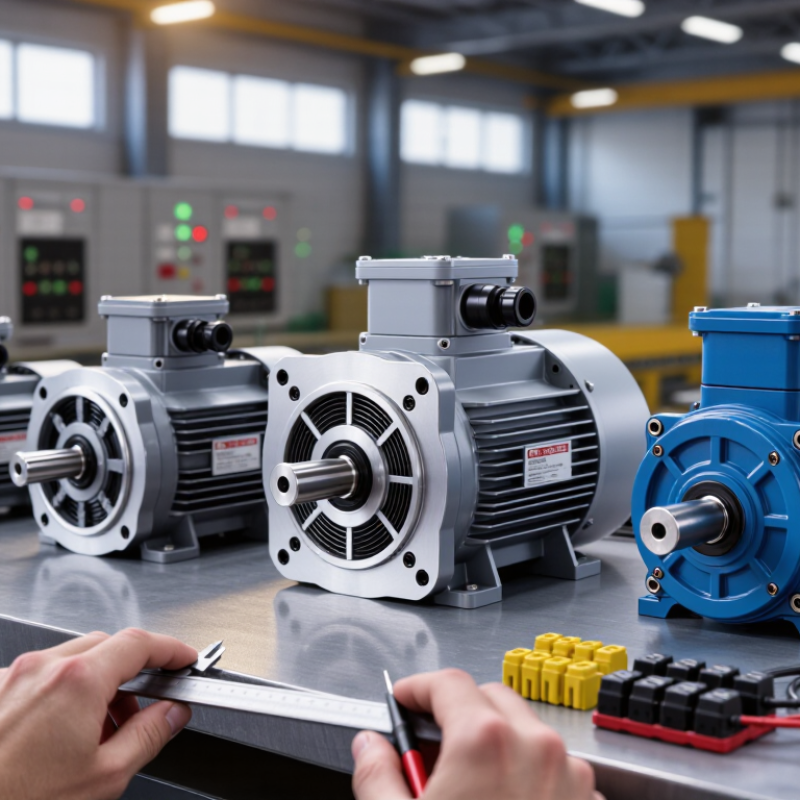
Top Variable Speed Motor Manufacturers for Global Buyers

Variable-Speed Motor Fundamentals: AC, DC, and Synchronous Designs

Variable-speed motors convert electrical power into controlled mechanical motion, but their behavior differs by design. AC motors are common in pumps, fans, conveyors, and compressors. A variable-frequency drive adjusts voltage and frequency, changing motor speed smoothly. In practice, a 50 Hz motor may run near 30 Hz during low-demand periods. This can reduce energy use and mechanical shock. However, low-speed cooling may become insufficient. A separate fan or careful load assessment may be necessary.

DC motors offer simple speed control and strong starting torque. Their brushes and commutators can create maintenance points, especially in dusty workshops or continuous-duty equipment. Brushless DC designs reduce this concern through electronic commutation. They still require compatible controllers and accurate feedback. I have seen selection errors occur when buyers compare rated speed alone. Current demand, duty cycle, heat, and load inertia matter just as much.

Synchronous motors maintain speed closely with the applied electrical frequency. Permanent-magnet versions can deliver high efficiency and compact torque, while electrically excited designs suit different operating conditions. They often need advanced drives for reliable starting and positioning. Encoder quality also affects real-world performance. The distinction is not always clean. A technically efficient motor may disappoint if the drive, gearbox, or cooling system is poorly matched. Global buyers should request test data, protection ratings, insulation class, noise values, and documented operating limits before comparing manufacturers.

IEC 60034-30-1 Efficiency Classes: Comparing IE3 and IE4 Motors

Top Variable Speed Motor Manufacturers for Global Buyers

IEC 60034-30-1 defines efficiency classes for many line-operated AC motors. IE3 is classified as premium efficiency, while IE4 reaches a higher efficiency level. The difference may appear small on a nameplate. It becomes significant after thousands of operating hours.

IE4 motors generally reduce electrical losses, especially in continuous-duty applications. However, they often cost more and may have different starting characteristics. A higher rating does not guarantee lower total cost. Buyers should compare rated load, annual running hours, electricity prices, and maintenance access. A motor running lightly may not recover the IE4 premium quickly. That detail is easy to miss.

Variable speed operation adds another layer. IEC 60034-30-1 mainly addresses line-operated motors, so inverter-fed applications need additional technical verification. Check compatibility with the drive, insulation system, cooling performance, bearing protection, and low-speed torque. For converter-fed motors, consult applicable data under IEC 60034-30-2 and request tested efficiency curves. In practical procurement work, I have seen buyers trust a single efficiency figure too much. That approach can fail. Confirm losses across the actual speed range, not only at full load. Also review voltage, frequency, duty cycle, ambient temperature, and efficiency test conditions before comparing suppliers.

Global Manufacturer Profiles: ABB, Siemens, WEG, Nidec, and TECO

Global buyers often compare five established variable speed motor manufacturers with different strengths. One European automation specialist emphasizes integrated drives, digital monitoring, and energy management. Its motors suit factories seeking coordinated control across pumps, fans, and conveyors.

A second German engineering group is known for broad industrial compatibility and detailed commissioning tools. It often supports complex production lines where precise speed control matters. A Brazilian manufacturer attracts buyers with rugged designs, regional service, and practical maintenance access. Its products can perform well in demanding workshops, though local support should be checked carefully.

A Japanese motor producer offers compact solutions, efficient operation, and strong manufacturing consistency. These features appeal to equipment builders with limited cabinet space. Another Asian supplier provides competitive motor-and-drive packages for general industrial applications. Buyers may value flexible specifications and accessible pricing, but documentation quality can differ by market.

Real purchasing experience shows that efficiency ratings are only part of the decision. Confirm voltage, duty cycle, enclosure protection, shaft dimensions, and ambient temperature limits. Ask for test reports and spare-parts availability. A quiet motor can still create costly downtime if technicians cannot repair it quickly. I have also seen buyers overvalue purchase price and underestimate installation training. That judgment deserves review. Regional certifications, delivery schedules, warranty terms, and service response times should be compared beside laboratory performance.

Typical Global Low-Voltage Supply Systems for Variable-Speed Motor Applications

The chart shows representative line-to-line voltage levels commonly used in industrial motor and variable-frequency-drive installations worldwide. Actual motor ratings depend on local grid standards, equipment design, and application requirements. Both 50 Hz and 60 Hz systems are widely used globally.

Drive Compatibility: Evaluating 50/60 Hz, Torque, IP Ratings, and Controls

For global buyers, drive compatibility matters more than a motor’s headline efficiency. A 50 Hz motor may run on a 60 Hz supply, but speed, cooling, and torque can change. Always confirm the inverter’s output range and the motor’s base frequency. The IEA reports that electric motor systems consume roughly half of global electricity. Small compatibility errors can therefore create significant operating costs.

Torque data deserves practical testing. Check starting torque, overload capacity, and low-speed cooling under the actual load profile. A conveyor carrying wet material behaves differently from a lightly loaded fan. IEC 60034-30-1 provides efficiency-class guidance, but efficiency labels do not guarantee suitable variable-speed performance. That assumption is risky.

IP ratings also require context. IEC 60529 defines protection levels, yet an IP55 enclosure may not suit constant washdown, salt exposure, or fine dust. Controls must match the application, including sensor feedback, braking, ramp times, and fault communication. Field experience suggests that simple control settings often outperform complex systems that operators cannot maintain. Still, this is not universal. Harmonic distortion, cable length, and bearing currents can expose weaknesses after installation. Buyers should request test curves, thermal limits, and documented compatibility between the motor, drive, and control platform. Industry reports from the U.S. Department of Energy repeatedly identify system integration as a major efficiency opportunity, not merely motor replacement.

Top Variable Speed Motor Manufacturers for Global Buyers - Drive Compatibility: Evaluating 50/60 Hz, Torque, IP Ratings, and Controls

Anonymous technical comparison of common variable-speed motor solution profiles used by global buyers. Specifications are representative IEC-based selection values and should be confirmed against the final motor and drive datasheets.

Motor Solution Profile Typical Power Range Frequency Compatibility Typical Speed Range Torque Capability Common IP Rating Recommended Control Method Best-Fit Applications
General-Purpose IEC Induction Motor 0.12–315 kW 50/60 Hz; commonly rated for 380–415 V at 50 Hz or 460 V at 60 Hz Approximately 300–3,600 rpm depending on pole count and frequency Constant torque; short-term overload commonly 150% of rated torque with a suitable drive IP55 Sensorless vector control for standard loads; V/f control for basic fans and pumps Conveyors, machine tools, compressors, packaging equipment
High-Efficiency IE3 Induction Motor 0.75–1,000 kW 50/60 Hz; verify rated voltage, current, and permissible frequency range Typically 750–3,600 rpm; usable range depends on cooling and load torque Stable continuous torque with reduced operating losses; drive sizing must account for higher inrush and magnetizing current IP55 or IP56 Closed-loop or sensorless vector drive for precise speed regulation Industrial pumps, fans, extruders, material handling, process lines
Permanent-Magnet Synchronous Motor 0.75–500 kW Usually compatible with 50/60 Hz systems through a matched inverter; direct-on-line starting is generally unsuitable Approximately 100–3,600 rpm, subject to inverter and thermal limits High starting torque and high efficiency at partial load; precise motor parameters are required for commissioning IP55 or IP65 Dedicated PM vector control with encoderless or encoder feedback Energy-efficient pumps, compressors, elevators, servo-like machinery
Brake Motor for High-Inertia Loads 0.12–90 kW 50/60 Hz; brake coil voltage and rectifier configuration must match the supply Approximately 750–3,600 rpm with controlled acceleration and deceleration High dynamic torque; braking torque commonly selected near 100–150% of motor rated torque IP55 Vector drive with brake sequencing, ramp control, and external brake interlock Hoists, cranes, indexing systems, conveyors, saws
Washdown and Hygienic Motor 0.37–75 kW 50/60 Hz; confirm drive output voltage and allowable motor cable length Approximately 300–3,600 rpm; low-speed continuous operation requires thermal review Constant-torque operation with frequent starts; select additional thermal margin for low-speed duty IP66/IP69 Sensorless vector control with low-speed torque compensation Food processing, beverage lines, pharmaceutical equipment, washdown conveyors
Explosion-Protected Motor 0.12–500 kW 50/60 Hz only when the certification, voltage, temperature class, and drive combination permit it Typically 750–3,600 rpm; minimum speed may be restricted by hazardous-area cooling requirements Application-specific torque; overload and stall limits must remain within the certified system parameters IP55–IP66 Certified variable-frequency drive package with approved motor protection settings Petrochemical plants, paint facilities, gas handling, grain and dust environments
Integrated Motor-Drive Unit 0.37–30 kW Input commonly supports 380–480 V, 50/60 Hz; output frequency is electronically controlled Approximately 0–3,600 rpm, subject to firmware and cooling limits Programmable constant-torque or variable-torque profiles; peak torque depends on inverter rating IP55 or IP65 Built-in inverter with keypad, digital I/O, fieldbus, or Ethernet-based control Modular conveyors, compact machines, decentralized automation
Servo-Grade Synchronous Motor 0.2–100 kW Requires a matched servo drive; 50/60 Hz refers to the incoming supply rather than the motor operating frequency 0–6,000 rpm or higher depending on the mechanical design and feedback system High peak torque, commonly 200–300% of rated torque for short periods IP65 or IP67 Closed-loop position, speed, and torque control with encoder or resolver feedback Robotics, CNC equipment, printing, electronic assembly, pick-and-place systems
Variable-Torque Pump and Fan Motor Package 0.75–1,000 kW 50/60 Hz; drive input and motor nameplate voltage must be matched to the local grid Approximately 600–3,600 rpm; operating speed is adjusted to process demand Torque rises approximately with the square of speed for centrifugal loads; soft starting reduces mechanical stress IP55 or IP56 V/f or sensorless vector control with PID process regulation and sleep/wake functions HVAC, water treatment, irrigation, cooling towers, industrial ventilation
Buyer verification points: Confirm motor nameplate voltage, rated current, base frequency, insulation system, minimum operating speed, overload duty, cable length, braking method, ambient temperature, altitude, and the drive manufacturer's compatibility list before purchase. IP ratings describe protection against solid objects and water ingress; they do not by themselves confirm corrosion resistance, washdown chemical resistance, or suitability for hazardous locations.

Buyer Comparison Criteria: Power Range, Service Networks, Costs, and Warranty

Global buyers should match a variable speed motor to the application, not only the nameplate. Power range matters because oversized motors waste capital and may operate inefficiently at light loads. The International Energy Agency reports that electric motor systems use about 53% of global electricity. Even small efficiency losses become expensive in continuous-duty plants.

Service coverage deserves equal attention. Ask how quickly technicians can reach the installation site, and whether spare bearings, drives, and control boards are stocked locally. A low purchase price can become costly after one failed component. The U.S. Department of Energy’s pumping-system guidance identifies energy-saving opportunities above 20% through better system control and equipment selection. Results vary, though. Flow, duty cycles, and maintenance quality change the outcome.

Warranty terms should state coverage periods, labor limits, exclusions, and response times. A two-year warranty sounds strong until travel costs remain with the buyer. Compare total cost over ten years, including commissioning, electricity, inspections, replacement parts, and training. A practical quotation should show efficiency at several load points, not just peak performance. I would also request references from facilities with similar humidity, dust, and operating hours. Supplier claims are useful, but field records are harder to polish. The comparison may feel imperfect. That is normal. Reliability often appears in details absent from the brochure.

FAQS

What should buyers compare when selecting a variable speed motor?

Match the motor to the application, not just the nameplate. Check power range, voltage, duty cycle, enclosure protection, and shaft dimensions. Ambient temperature limits matter too. Purchase price alone gives an incomplete picture.

Why is motor efficiency important in industrial facilities?

Electric motor systems use about 53% of global electricity. Small efficiency losses can become expensive in continuous-duty plants. Review efficiency at several load points, not only peak performance. Peak figures can mislead.

Are larger motors always a better choice?

No. Oversized motors may waste capital and operate inefficiently at light loads. Select a power range that fits actual demand. Check starting conditions and changing load patterns. The biggest option may perform poorly.

What service details should buyers confirm?

Ask how quickly technicians can reach the installation site. Confirm local stock for bearings, drives, and control boards. Accessible maintenance can reduce downtime. A quiet motor is still costly if repairs take weeks.

How should buyers evaluate warranty terms?

Review coverage periods, labor limits, exclusions, and response times. Travel costs may remain with the buyer. A two-year warranty can sound stronger than it really is. Read the small details.

What information should a practical quotation include?

Request efficiency data at several load points. The quotation should also show commissioning costs and delivery schedules. Include training, inspections, spare parts, and expected electricity costs. A cheap quotation may hide important expenses.

How do operating conditions affect motor selection?

Humidity, dust, temperature, and operating hours affect reliability. Ask for references from facilities with similar conditions. Confirm enclosure protection and ambient temperature limits. Laboratory performance is not the whole story.

What role do integrated controls and monitoring play?

Integrated drives can coordinate pumps, fans, conveyors, and other equipment. Digital monitoring may help identify changing loads or maintenance needs. Precise control can improve system performance. Results still depend on installation quality and training.

Can better system control reduce energy use?

Improved control and equipment selection may create energy-saving opportunities above 20%. Actual results vary with flow, duty cycles, and maintenance quality. Measure performance after installation. Claims need field evidence.

Conclusion

A Variable Speed Motor provides flexible, efficient power control for industrial equipment by adjusting operating speed to match changing loads. Buyers should understand the differences between AC, DC, and synchronous designs, including their control methods, torque characteristics, maintenance needs, and typical applications. Efficiency is also a key consideration: IEC 60034-30-1 classifications such as IE3 and IE4 help compare energy performance and support long-term operating cost analysis.

When selecting a motor for global use, compatibility with the intended drive is essential. Important factors include 50/60 Hz operation, starting and continuous torque, enclosure and IP ratings, cooling requirements, feedback systems, and control integration. Buyers should also compare available power ranges, delivery capability, technical support, service coverage, total ownership cost, spare-parts access, and warranty terms. A well-matched motor and drive combination can improve reliability, reduce energy waste, and provide stable performance across diverse industrial environments.

Sienna

Sienna

Sienna is a skilled marketing professional with a deep expertise in our company’s core products and services. With a passion for innovation and detail, she plays a pivotal role in crafting insightful blog posts that not only highlight the unique features of our offerings but also provide valuable......