7 Magnetic Motor Buying Tips for Global Buyers

Time:2026-10-27 Author:Mason
0%

Buying a Magnetic Motor for global operations is not a simple catalog decision. It affects efficiency, maintenance, noise, production stability, and long-term operating cost. A motor that performs well in a controlled factory may struggle in a humid warehouse, a dusty workshop, or a region with unstable power. Buyers must examine the complete application, not only the rated output.

Dr. Jacek F. Gieras, a respected electric-machine researcher, has stated, “The performance of an electric machine depends on the interaction of magnetic and electric loading.” This principle remains highly practical. Magnet material, winding design, cooling, controller compatibility, and load behavior can change real-world results. Ask for test data. Check the duty cycle. Request clear information about temperature rise and expected service life.

Small details often reveal supplier quality. Look closely at bearing protection, cable glands, mounting dimensions, and packaging. A motor arriving with moisture damage creates an expensive delay. Certification also deserves careful review because requirements differ between markets. Do not assume one document covers every destination.

The cheapest quotation may hide integration costs. That is easy to miss. Buyers should compare efficiency under actual loads, replacement-part access, technical support, warranty terms, and delivery reliability. Speaking from experience, many purchasing mistakes happen before the purchase order is issued. A spreadsheet cannot capture every field problem. It can, however, expose missing questions.

This guide presents seven Magnetic Motor buying tips for global buyers. It focuses on practical checks, supplier evaluation, and decisions that remain defensible after installation. Some recommendations may require adjustment. Every application is different. That is the uncomfortable truth.
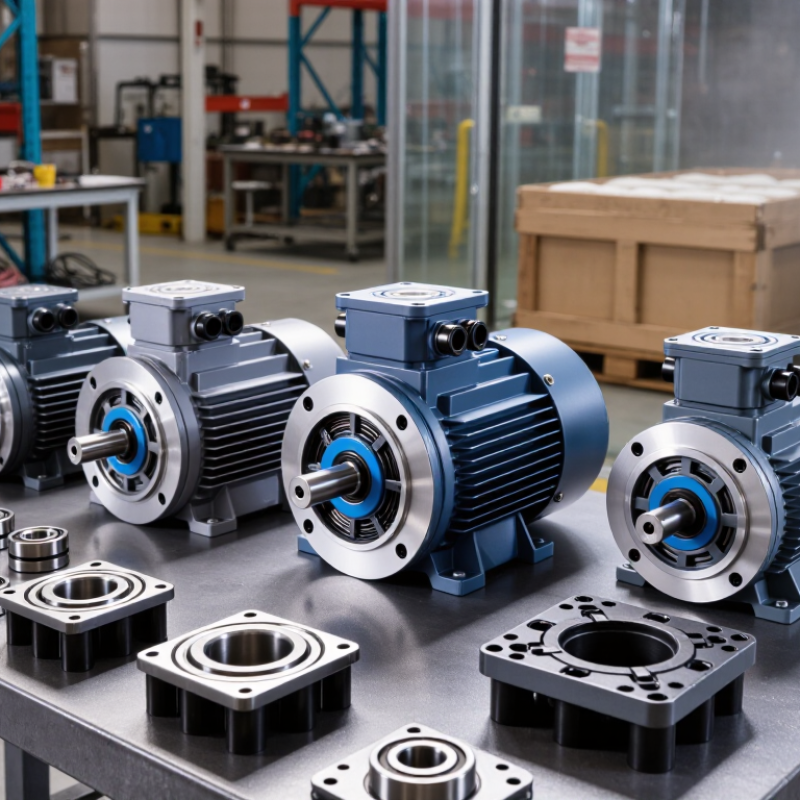
7 Magnetic Motor Buying Tips for Global Buyers

Classify the Load: 2-, 4-, or 6-Pole Motors at 50 Hz

Classify the Load: 2-, 4-, or 6-Pole Motors at 50 Hz

At 50 Hz, a two-pole motor runs near 3,000 rpm, while four-pole and six-pole motors approach 1,500 and 1,000 rpm. Actual speed falls slightly because of slip. IEC 60034-12 defines the operating framework for these induction motors. A two-pole unit suits compact fans, pumps, and high-speed machinery. A four-pole model usually fits conveyors, compressors, and general industrial loads. Six-pole motors provide slower rotation and stronger starting torque.

Speed is only half the decision. Torque, inertia, duty cycle, and starting frequency also matter. The IEA estimated that electric motor systems used about 46% of global electricity in its Energy-Efficiency Policy Opportunities report. Small efficiency gains can therefore affect operating costs significantly. A slower six-pole motor may reduce mechanical transmission losses, but it can increase motor size and purchase cost.

Check the load curve, not just the nameplate. A fan may tolerate two poles, while a loaded conveyor may need four or six. With a variable-frequency drive, speed control becomes flexible, yet low-speed cooling can weaken. I have seen buyers select a two-pole motor because its rated power looked sufficient. It overheated during repeated starts. That choice was technically neat, but operationally wrong. Verify acceleration time, ambient temperature, and service factor with the supplier.

Reference: IEC 60034-12; IEA, Energy-Efficiency Policy Opportunities, End-use Equipment.

Choose IE3–IE5 Efficiency Classes Under IEC 60034-30-1

Choosing IE3, IE4, or IE5 requires more than comparing efficiency numbers. IEC 60034-30-1 defines efficiency classes for specific line-operated AC motors, but it does not cover every motor design. Check the motor type, rated output, frequency, voltage, and operating speed before requesting quotations. A class label alone is not enough.

Ask suppliers for tested efficiency at 50% and 75% load, not only at full load. Real machines often run below their nameplate rating. An IE4 motor may save more energy in a pump running continuously, while an IE5 option may offer limited value in short-duty applications. Measure the duty cycle. Check the heat.

Confirm whether the quoted efficiency includes the complete motor or only the motor unit. Review the test standard, tolerance, power factor, starting current, enclosure rating, bearing design, and service conditions. For variable-speed systems, verify inverter compatibility and losses across the working speed range. IE3 is often a practical baseline, while IE4 or IE5 may reduce lifetime energy costs. However, higher efficiency can bring higher purchase prices, different dimensions, or control requirements. This is where buyers sometimes overestimate savings. Request a lifecycle calculation using local electricity rates, annual running hours, maintenance costs, and expected service life. Keep the assumptions visible. Something may be missing.

Match 50/60 Hz, Voltage, Phase, and IEC 60034-1 Tolerances

7 Magnetic Motor Buying Tips for Global Buyers

Frequency is the first checkpoint. A 50 Hz motor supplied at 60 Hz may run faster, alter torque, and increase mechanical stress. The reverse case can reduce speed and cooling performance. The IEA reports that electric motor-driven systems use about 46% of global electricity, so small selection errors can create meaningful operating costs. Check the nameplate, grid frequency, and driven-load speed together.

Tip: Ask for rated voltage, frequency, phase, current, speed, and connection diagrams. A 400 V, three-phase motor is not automatically suitable for a 415 V network. Confirm whether the supply is single-phase or three-phase. During commissioning, measure voltage between phases and record imbalance. I have seen “compatible” motors fail this simple site check. It is worth admitting that catalogue data may not reflect weak local grids.

IEC 60034-1 provides the reference framework for motor ratings, performance, and operating tolerances. Buyers should request the applicable edition and test conditions, rather than accepting a generic compliance statement. Review temperature rise, efficiency, starting current, torque, insulation class, and enclosure details. The U.S. Department of Energy notes that efficient motor systems can reduce substantial industrial energy use, but savings depend on correct sizing and loading. Tip: Require certified test reports, not only a datasheet. Leave room for uncertainty; voltage variation, altitude, ambient heat, and frequent starts can change real performance.

Specify IP55 or Higher Using IEC 60529 Ingress Protection Ratings

7 Magnetic Motor Buying Tips for Global Buyers

Specify IP55 or Higher Using IEC 60529 Ingress Protection Ratings

Tip: Treat the IP code as a buying requirement, not a marketing phrase. Under IEC 60529, IP55 means protection against harmful dust deposits and water jets from any direction. It does not mean waterproof operation. This distinction matters in washdown areas, coastal plants, and dusty workshops.

Ask the supplier for the motor’s test report, certificate, and exact IP rating. Confirm whether the rating applies to the complete motor, including the terminal box, shaft seal, and cable entry. A strong enclosure can still fail through a poorly fitted gland. Check the mounting position too. Drain holes and seals may perform differently when installed vertically.

Tip: Match IP55 with the real environment. For outdoor exposure, frequent cleaning, or heavy spray, IP56 or higher may offer better protection. Yet a higher number is not automatically safer. Condensation, chemicals, salt, and incorrect maintenance can still damage internal parts. Review the temperature range and corrosion protection.

One practical lesson is easy to miss. Dust protection is tested under defined conditions, not every possible factory situation. Request installation instructions and maintenance intervals. Inspect seals after transport and rewiring. A minor gap can become a major failure. I would also allow a safety margin, because real sites are rarely as clean as the specification sheet.

Verify IEC 60034-2-1 Tests, ISO 9001 Quality, Warranty, and Lead Time

A magnetic motor can look efficient on paper and still disappoint in service. Global buyers should request test evidence based on IEC 60034-2-1, not only a catalog efficiency figure. Check the test method, rated voltage, frequency, temperature, and load point. The report should identify the tested motor clearly. A serial number helps. Ask whether losses were measured by an approved laboratory or internally. Small details matter here.

ISO 9001 certification can support process control, but it does not guarantee every motor is perfect. Review the certificate scope and validity date. Ask how winding resistance, vibration, insulation, and rotor balance are recorded before shipment. Photos of nameplates and inspection sheets add useful traceability. Do not accept vague claims. They age badly. A practical factory audit, even by video, may reveal loose terminals or weak packaging.

Warranty terms deserve the same attention as performance data. Confirm coverage length, excluded failures, replacement procedures, and response times. Request the written terms before placing an order. Lead time should include production, testing, packing, and export documents. A promised seven-day shipment may exclude testing. That is where planning often fails. Buyers should also ask about spare bearings, local service options, and voltage compatibility. I have found that a lower purchase price can hide longer downtime, although this judgment is not always easy before delivery.

FAQS

How should buyers choose between IE3, IE4, and IE5 motors?

Check the motor type, output, voltage, frequency, and speed. IE3 is often a practical baseline. IE4 or IE5 may reduce long-term energy costs. Higher efficiency can mean higher prices and different dimensions.

Should efficiency be checked only at full load?

No. Ask for tested efficiency at 50%, 75%, and 100% load. Many machines operate below rated capacity. A pump running continuously may benefit from IE4. Short-duty equipment may not.

What information is needed for a lifecycle cost calculation?

Include electricity rates, yearly operating hours, maintenance costs, purchase price, and expected service life. Keep every assumption visible. The estimate may be imperfect.

How can buyers verify the quoted efficiency?

Confirm whether the figure covers the complete motor or only the motor unit. Request certified test reports and test conditions. Review power factor, starting current, temperature rise, and efficiency tolerance.

What should be checked before matching a motor to a power supply?

Compare the nameplate, grid frequency, voltage, phase, current, and driven-load speed. A 400-volt, three-phase motor is not automatically suitable for 415 volts. Measure voltage between phases during commissioning.

Why does frequency matter so much?

A motor designed for 50 hertz may run faster on 60 hertz. This can change torque and increase mechanical stress. The reverse case may reduce speed and cooling. Small errors become expensive.

What should variable-speed motor buyers confirm?

Verify inverter compatibility and losses across the complete operating-speed range. Check starting current, cooling, torque, insulation, and control requirements. Do not judge performance from one speed point.

What does an IP55 enclosure rating protect against?

IP55 protects against harmful dust deposits and water jets from any direction. It does not mean waterproof operation. Confirm protection for the terminal box, shaft seal, and cable entry. A poor cable gland can still cause failure.

Is IP55 suitable for every outdoor or washdown location?

Not always. Frequent cleaning, heavy spray, salt, or condensation may require stronger protection. Consider IP56 or higher where conditions demand it. Inspect seals after transport and rewiring. Real sites are rarely clean.

Conclusion

Selecting the right Magnetic Motor for international applications requires careful attention to operating conditions, efficiency, compatibility, and quality assurance. Begin by classifying the load and choosing a suitable 2-, 4-, or 6-pole design for 50 Hz operation, since pole count affects speed and performance. Energy efficiency is equally important, so buyers should consider IE3, IE4, or IE5 efficiency classes in line with IEC 60034-30-1 to reduce operating costs and support sustainability goals.

Before placing an order, confirm the required frequency, voltage, phase configuration, and allowable tolerances under IEC 60034-1, especially when equipment will operate across different electrical systems. For demanding environments, specify IP55 or a higher rating according to IEC 60529 to improve protection against dust and moisture. Finally, review IEC 60034-2-1 test documentation, ISO 9001 quality procedures, warranty terms, and lead time. These checks help global buyers compare suppliers confidently and select a reliable motor for long-term service.

Mason

Mason

Mason is a seasoned marketing professional with a deep expertise in the company's offerings and a passion for driving brand awareness. With a strong background in digital marketing strategies, he has an innate ability to connect with diverse audiences and effectively communicate product benefits.......