China Best Stepper Motor Driver Manufacturers

Time:2026-09-19 Author:Sophia
0%

China has become a major production base for motion-control components, including the Stepper Motor Driver. Its strength is not limited to lower manufacturing costs. It also includes dense electronics supply chains, automated assembly, and flexible engineering support.

MarketsandMarkets’ 2024 Stepper Motor Market report estimates the sector will grow from about USD 2.5 billion in 2023 to nearly USD 3.5 billion by 2028. That forecast implies a compound annual growth rate above 7%. Grand View Research also identifies industrial automation, robotics, medical equipment, and 3D printing as important demand areas. These figures are estimates, not guarantees. Report methods and market definitions differ.

Takashi Kenjo, a respected stepping-motor researcher and author, described the stepping motor as “a digital actuator.” The driver makes that idea practical. It converts pulse commands into controlled current, torque, and shaft movement. In a factory test, a reliable unit should maintain stable microstepping beside a warm cabinet and noisy power lines. Buyers should examine rated voltage, peak current, decay mode, thermal protection, EMC performance, and pulse-frequency limits. Datasheets matter. So do test records.

The best Chinese manufacturers combine circuit design with disciplined production control. They should provide traceable components, sample testing, fault analysis, and responsive technical support. Some supplier rankings look convincing but rely mainly on marketing claims. That is a weakness worth questioning. This guide evaluates China’s leading Stepper Motor Driver manufacturers through measurable engineering capability, application experience, certification evidence, and long-term reliability.
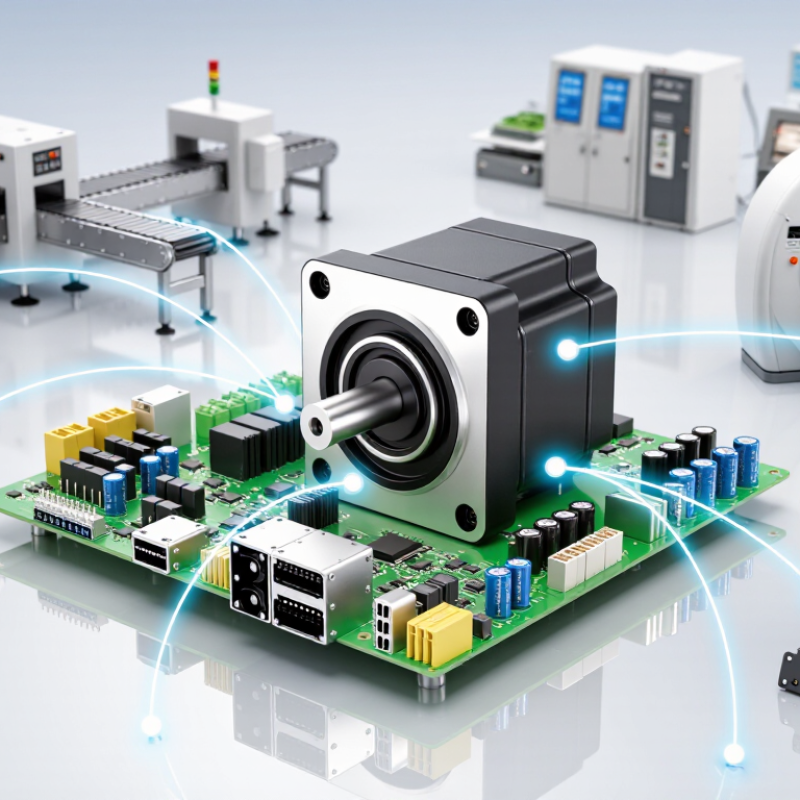
China Best Stepper Motor Driver Manufacturers

Stepper Motor Drivers: Functions, Types, and Selection Criteria

China Best Stepper Motor Driver Manufacturers

Stepper motor drivers convert control pulses into accurately timed phase currents. They regulate motor speed, direction, and torque. Many models also provide microstepping, current limiting, overvoltage protection, and thermal shutdown. These functions reduce vibration, but they cannot correct poor mechanical alignment.

The main types include constant-voltage, constant-current, microstepping, and closed-loop drivers. Constant-current designs suit modern motion systems because they maintain torque across changing speeds. Microstepping improves movement smoothness, although it does not always deliver equal positioning accuracy. Closed-loop units use feedback to detect missed steps. They usually cost more and require additional wiring. A 2024 estimate from Mordor Intelligence placed the global stepper motor market near USD 5 billion, with steady growth expected through 2029. Grand View Research also reported a mid-single-digit annual growth outlook. These figures describe motors, not drivers, but they indicate expanding demand for motion control hardware.

Tips: Match the driver’s continuous current with the motor rating, not only its peak value. Check supply voltage, torque-speed curves, pulse frequency, thermal conditions, and cabinet airflow. Test resonance near the machine’s normal operating speed. In practice, this step is often skipped. That is a mistake. Leave safety margin for acceleration, friction, and load changes. Review certification documents and production test records before selecting a manufacturer. Reliable suppliers should provide wiring diagrams, protection specifications, and repeatable inspection data.

China’s Stepper Motor Driver Manufacturing Landscape

China’s stepper motor driver manufacturing landscape combines electronics assembly, metal machining, firmware development, and export logistics. Many factories support custom current ratings, microstepping levels, communication interfaces, and enclosure designs. Their supply networks often reduce lead times for prototypes and medium-volume orders. However, manufacturing ability varies widely between suppliers.

A reliable evaluation should examine more than a polished product sample. Check thermal testing records, component traceability, firmware revision control, and protection against overvoltage or overheating. Ask for load-test data under realistic conditions, such as a motor running continuously inside a warm cabinet. Factory audits can also reveal soldering consistency and cable quality. Not every low quote is a bargain. Some savings come from weaker testing, limited support, or unstable component sourcing.

Tips: Request three production samples, not one. Compare noise, temperature, torque stability, and fault recovery. Confirm whether test reports match your motor and power supply. Keep written records of tolerances and acceptance criteria. A supplier may promise flexible customization, yet small changes can expose weak engineering controls. That point deserves honest review before a long-term order.

China Best Stepper Motor Driver Manufacturers - China’s Stepper Motor Driver Manufacturing Landscape

Manufacturing Dimension China Manufacturing Landscape Common Technical Range or Practice Typical Application Fit Buyer Evaluation Focus
Product Architecture Production commonly covers standalone stepper drivers, integrated motor-driver units, and closed-loop stepper systems. Open-loop Closed-loop Integrated Open-loop systems suit cost-sensitive positioning; closed-loop systems suit applications requiring stall detection and reduced position loss. Check whether the controller, encoder interface, alarm output, and tuning software match the machine architecture.
Motor Compatibility Manufacturing portfolios typically support two-phase hybrid stepper motors across several frame sizes and winding ratings. Common compatibility includes NEMA 8, NEMA 11, NEMA 17, NEMA 23, NEMA 24, and NEMA 34 motor families. Small automation mechanisms, laboratory equipment, 3D printers, CNC equipment, packaging machines, and robotics. Verify phase current, inductance, connector arrangement, shaft load, and motor insulation requirements.
Current Capacity Available products range from compact low-current modules to high-current industrial drivers for larger stepper motors. Typical catalog ranges are approximately 0.5–8 A RMS per phase, with higher-current models available for specialized systems. Low-current drivers fit compact motion systems; high-current versions fit heavier loads and larger motors. Compare continuous RMS current with peak current, thermal derating, and the actual motor nameplate rating.
Supply Voltage Domestic and export-oriented production commonly includes low-voltage DC and industrial AC-input product families. Typical input classes include 12–48 VDC, 24–80 VDC, and approximately 110–240 VAC, depending on the product series. DC input is common in embedded machinery; AC input is used in cabinet-based industrial equipment. Confirm allowable voltage tolerance, surge protection, power-supply sizing, and cabinet electrical standards.
Microstepping Capability Microstep settings are widely offered through DIP switches, rotary selectors, software parameters, or fieldbus configuration. Common settings range from full-step and half-step to 1/8, 1/16, 1/32, 1/64, 1/128, and higher electronic resolutions. Higher microstepping can improve motion smoothness and reduce audible resonance in suitable operating conditions. Assess whether the selected microstep setting improves real mechanical performance rather than only increasing command resolution.
Control Interfaces Manufacturers commonly provide pulse-and-direction control alongside selected industrial communication options. PUL/DIR CW/CCW RS-485 CAN Ethernet-based options Pulse control suits PLC and motion-controller integration; networked versions support multi-axis machine communication. Check electrical levels, maximum pulse frequency, termination requirements, protocol documentation, and synchronization behavior.
Resonance and Noise Control Current shaping, anti-resonance algorithms, selectable decay modes, and adaptive load control are common differentiating features. Features may include automatic current reduction at standstill, mid-band resonance suppression, and configurable acceleration profiles. Useful for camera stages, inspection systems, medical equipment, office automation, and low-noise machinery. Request measured noise, vibration, and temperature data at the intended speed, load, and microstep settings.
Protection Functions Industrial product families generally include electronic protection to improve field reliability and reduce damage from wiring faults. Common functions include overcurrent, overvoltage, undervoltage, overtemperature, short-circuit, and position-error alarms. Important for unattended automation, machine tools, packaging lines, and equipment operating in variable ambient conditions. Review protection thresholds, recovery behavior, alarm outputs, fault logs, and whether faults are latched or automatically cleared.
Thermal Management Enclosures may use aluminum housings, internal heat sinks, conduction cooling, or forced-air cooling for higher-power designs. Operating temperature specifications commonly fall within approximately 0–50°C or −10–50°C, with derating above the rated range. Natural cooling suits moderate-duty applications; forced-air or cabinet cooling may be required for continuous high-current operation. Compare heat dissipation, mounting orientation, enclosure airflow, duty cycle, and ambient-temperature derating curves.
Quality and Compliance Process Export-oriented production commonly uses incoming inspection, automated assembly, functional testing, aging tests, and batch traceability. Relevant market requirements may include CE-related conformity, RoHS material restrictions, EMC testing, and electrical safety evaluation. Required for international machinery projects and installations subject to customer or regulatory compliance procedures. Request current declarations, test reports, revision-controlled manuals, serial traceability, and documented quality procedures.
Regional Manufacturing Concentration Motion-control supply chains are concentrated in developed electronics and machinery clusters, especially in the Yangtze River Delta and Pearl River Delta. These regions provide access to PCB assembly, metal processing, connectors, power electronics, motors, cables, and industrial automation integration. Suitable for buyers seeking coordinated sourcing of drivers, motors, cables, control panels, and complete motion assemblies. Evaluate supplier proximity to component partners, engineering support, export logistics, and spare-parts availability.
Customization Capability Manufacturing services may include firmware adjustment, label and enclosure customization, connector changes, parameter presets, and integrated motor-driver development. Customization often depends on minimum order quantity, tooling needs, certification impact, and firmware validation requirements. Useful for OEM equipment, private-label products, compact machine modules, and application-specific control cabinets. Clarify ownership of firmware, change-control procedures, sample approval, minimum order quantities, and production lead time.
After-Sales and Export Support Internationally oriented suppliers commonly provide English manuals, wiring diagrams, parameter software, remote troubleshooting, and replacement-part support. Support quality varies by response time, documentation completeness, spare-stock policy, and engineering communication. Particularly important for distributors, machine exporters, system integrators, and remote installations. Test technical response before purchase and confirm warranty duration, return procedures, software access, and replacement compatibility.
Technical ranges shown above are representative industry ranges for China-made stepper motor driver products; the exact specification depends on the individual product series, application conditions, and compliance requirements.

Key Capabilities of Leading Chinese Manufacturers

Leading Chinese stepper motor driver manufacturers compete through engineering depth, not low price alone. Experienced teams match driver current, microstepping, voltage range, and motor inductance before production. They study motion profiles from real machines. A packaging line may need quiet acceleration, while a small CNC axis demands stable torque at higher speeds. This practical approach reduces vibration, heat, and missed steps. It also reveals a weakness: early specifications are sometimes too general. Careful engineers ask for load data.

Strong manufacturers operate testing areas with oscilloscopes, thermal cameras, load fixtures, and endurance rigs. They inspect solder joints, connector retention, firmware behavior, and protection responses. Sample units should run through temperature changes and repeated start-stop cycles. Traceable records matter. They connect component batches to test results, making corrective action faster. Yet testing is not automatically complete. A factory may simulate normal loads but overlook cable noise or installation errors. Field feedback must return to design teams.

Customization is another key capability. Engineers can adjust current settings, communication interfaces, enclosure dimensions, and mounting details for an integrator’s equipment. Reliable suppliers document revisions clearly and provide drawings, test reports, and operating guidance. Technical support should answer with measured data, not vague promises. Production capacity matters too, but fast output without process control creates hidden risk. Buyers should audit samples, ask about failure analysis, and verify support after delivery. No manufacturer gets every decision right. The best teams expose limitations early and improve them openly.

How to Evaluate Chinese Stepper Motor Driver Suppliers

Evaluating Chinese stepper motor driver suppliers requires more than comparing unit prices. Grand View Research reported that the global stepper motor market was valued at approximately USD 4 billion in 2023. Its forecast also indicates steady growth through 2030. This demand increases supplier choices, but not necessarily supplier quality. Request electrical schematics, firmware revision records, and production traceability before requesting samples. A reliable supplier should explain current limits, microstepping accuracy, pulse-frequency limits, and protection against overvoltage and overheating.

Test the driver with your actual motor, voltage, load, and enclosure conditions. Measure temperature near the power stage after several hours, not only during a short demonstration. Review EMC evidence, insulation tests, and quality procedures aligned with ISO 9001. IEC 61800-5-1 is also useful when evaluating adjustable-speed electrical drive safety. MarketsandMarkets has identified industrial automation as a major growth area, making stable documentation increasingly important for long-term procurement. Ask for failure-rate data, incoming inspection records, and corrective-action reports. Real evidence matters.

Do not trust a perfect sample alone. Batch consistency can be harder. I would compare at least three production lots and inspect connector soldering, heat-sink bonding, and label traceability. A lower-cost driver may require extra filtering, cooling, or field replacements. Those hidden expenses should enter the total-cost calculation. Supplier communication also deserves a practical test: send a technical fault scenario and judge the response time, measurements, and proposed remedy. Vague promises are not engineering evidence.

China Best Stepper Motor Driver Manufacturers - How to Evaluate Chinese Stepper Motor Driver Suppliers

This buyer-side evaluation model assigns a total weighting of 100% to the criteria most relevant when comparing stepper motor driver suppliers. Electrical compatibility and current capability receive the highest weights because they directly affect motor performance, system reliability, and application safety. Buyers should verify each supplier with datasheets, sample testing, protection specifications, compliance documents, production lead times, and technical support.

Applications, Standards, and Quality Considerations

China’s leading stepper motor driver manufacturers serve CNC machines, 3D printers, packaging lines, medical equipment, and small robots. Each application needs a different balance of torque, speed, noise, and heat control. A driver for a desktop printer may prioritize quiet microstepping. A factory axis often needs stronger current handling and stable operation under vibration.

Standards deserve close attention. Manufacturers should provide evidence for applicable EMC and electrical safety requirements, including IEC 61800-related guidance where relevant. RoHS compliance also supports responsible material selection. CE documentation may be necessary for products entering European markets, but paperwork alone cannot prove product quality. Ask for test reports, circuit protection details, and clear operating limits.

Quality appears in practical details. Look for accurate current regulation, reliable overvoltage protection, thermal shutdown, and consistent microstep performance. Isolation can reduce control-system risks in industrial installations. Batch testing, serial traceability, and aging tests add confidence. Request samples before approving large orders. Test them with your actual motor, cable length, load, and power supply. No supplier is flawless. Some published specifications may use ideal laboratory conditions, so verification remains essential. A careful supplier will discuss failure rates, warranty handling, and design changes openly. Personally, I would also inspect terminal strength and enclosure cooling, because small mechanical weaknesses often become expensive field problems.

FAQS

What does a stepper motor driver do?

It converts control pulses into timed phase currents. The driver controls motor speed, direction, and torque. It may also limit current and protect against overheating.

Which stepper motor driver type is usually suitable for modern motion systems?

Constant-current drivers usually maintain torque better across changing speeds. Microstepping can reduce vibration and create smoother movement. However, smoother motion does not guarantee equal positioning accuracy.

When should a closed-loop driver be considered?

Consider one when missed steps could damage production or reduce accuracy. It uses feedback to detect position errors. Closed-loop systems cost more and need additional wiring.

How should the driver’s current rating match the motor?

Match continuous driver current with the motor’s rated current. Do not select a driver using peak current alone. Leave margin for acceleration, friction, and changing loads.

What electrical and mechanical details should buyers check?

Check supply voltage, torque-speed curves, pulse frequency, and motor inductance. Also inspect cabinet airflow and thermal conditions. Poor alignment can still cause vibration.

Why should resonance testing be part of driver selection?

Stepper motors may vibrate near certain operating speeds. Test the driver and motor near the machine’s normal speed range. This step is often skipped. That is a mistake.

What testing should a reliable manufacturer provide?

Look for temperature testing, repeated start-stop cycles, and load testing. Useful facilities may include oscilloscopes, thermal cameras, and endurance rigs. Ask for traceable inspection records. Testing is never perfect.

What customization options may be available?

Engineers may adjust current settings, communication interfaces, enclosure dimensions, and mounting details. They should provide updated drawings and clear revision records. Vague promises are not enough.

Which applications use stepper motor drivers?

Common applications include CNC equipment, 3D printers, packaging lines, medical equipment, and small robots. A desktop printer may prioritize quiet microstepping. A factory axis may need stronger current handling and vibration resistance.

How can buyers verify product quality before placing a large order?

Request samples and test them with the actual motor, cable length, load, and power supply. Review protection details, operating limits, certification evidence, and failure-handling procedures. Paperwork alone proves little. Inspect terminal strength and enclosure cooling too.

Conclusion

China’s stepper motor driver manufacturing sector offers a wide range of solutions for motion control, from basic single-axis devices to advanced microstepping and multi-function systems. A Stepper Motor Driver regulates current, controls motor speed and position, and improves operating smoothness, making it essential for equipment such as CNC machines, robotics, packaging systems, 3D printers, and automation lines. Understanding driver types, voltage and current ratings, control interfaces, heat management, and protection features is important when selecting the right product.

Leading Chinese manufacturers typically compete through engineering capability, flexible customization, efficient production, and consistent quality control. When evaluating suppliers, buyers should examine technical documentation, testing procedures, production capacity, communication efficiency, and after-sales support. Certifications, electrical safety, electromagnetic compatibility, material quality, and compliance with applicable international standards should also be considered. A reliable supplier should provide stable performance, clear specifications, sample verification, and solutions suited to the application’s load, environment, and control requirements.

Sophia

Sophia

Sophia is a dedicated marketing professional with an exceptional depth of knowledge about her company's products and services. With a keen understanding of market trends and customer needs, she crafts insightful blog posts that not only inform but also engage readers, enriching the company’s online......