 Strata Motor
Strata Motor
Strata Motor
Global buyers are searching for a Compact DC Motor that delivers more than small dimensions. They need dependable torque, efficient operation, quiet performance, and stable quality across different applications. A motor installed inside a medical pump, robotic gripper, camera module, or portable tool must fit precisely. Its shaft cannot wobble. Its temperature cannot rise unexpectedly.
Ned Mohan, a respected electrical-machine educator and author, writes, “Electric machines are the workhorses of industry.” This observation remains useful when comparing compact motors for international purchasing. A reliable selection should examine rated voltage, no-load speed, stall torque, gear ratio, brush or brushless design, and expected service life. Buyers should also inspect drawings, test reports, sample consistency, and supplier communication. A polished catalog is not enough.
Small details matter.
For example, a 12-volt motor may appear suitable, yet its starting current could exceed the controller’s capacity. A metal gearbox may improve durability, but it can increase noise and weight. Brushless construction often supports longer service, though it may require more complex control electronics. Certification, packaging, and replacement availability also influence the real cost after delivery.
This comparison will review leading Compact DC Motor options for global buyers. It will consider performance, integration difficulty, customization, and supplier reliability. Some rankings remain debatable because application conditions differ. That is worth admitting. The best motor for a miniature fan may fail in a precision actuator. Careful testing still beats confident assumptions.
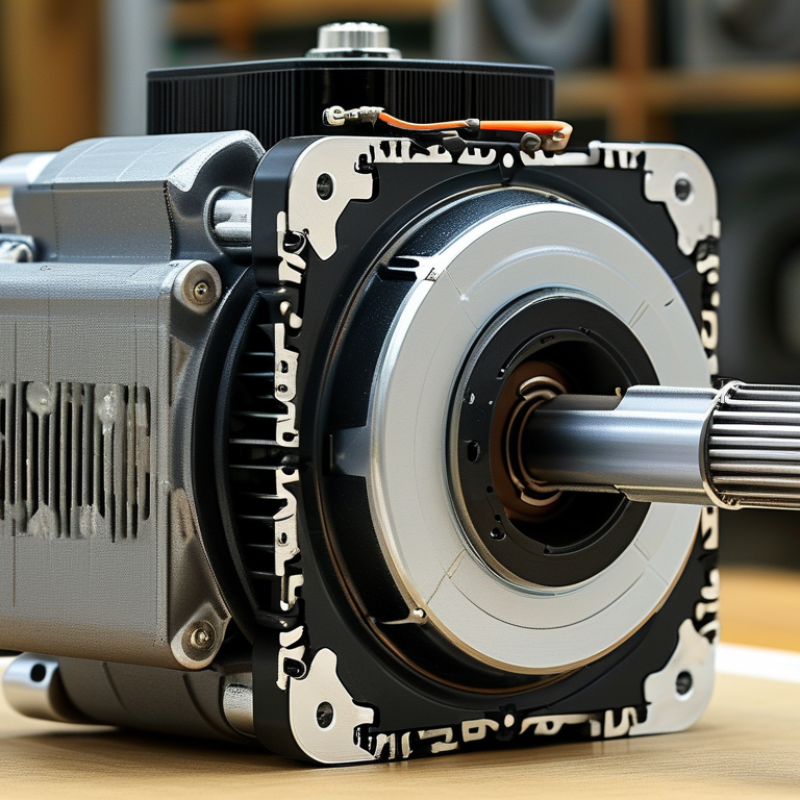
Compact DC motors are usually selected within 6–24 V ratings, not by physical size alone. A 6 V motor suits small pumps, valves, and portable mechanisms. A 12 V motor offers a practical balance for control systems and light industrial equipment. A 24 V motor can reduce current across longer wiring. However, voltage rating is not the working load. Check torque, speed, stall current, duty cycle, and available power supply before purchasing.
Brushed motors use mechanical brushes and commutators. They are affordable, easy to control, and suitable for intermittent operation. Brushless motors use electronic commutation, creating lower wear and better efficiency during extended use. They usually require a compatible controller. In testing, a brushed motor may perform well initially but lose consistency after repeated high-load cycles. That detail is easy to underestimate. Environmental conditions also matter, especially heat, dust, vibration, and limited ventilation.
Match the motor to its real load, not its advertised maximum. Measure startup current with a suitable meter. Leave thermal headroom below the rated limit. For brushless designs, confirm controller voltage and feedback requirements. For brushed designs, inspect electrical noise and brush life. A motor running quietly at no load may struggle when a gearbox, fan, or conveyor is attached. Small prototypes can mislead, so test the complete assembly before final selection.
Choose 6 V for small pumps, valves, and portable mechanisms. 12 V suits many control systems. 24 V reduces current through long cables. Voltage alone does not define performance. Check torque, speed, and stall current.
Brushed motors use mechanical brushes and commutators. They are affordable and simple to control. Brushless motors use electronic commutation and usually last longer. They need a compatible controller. Neither design is perfect for every application.
Not reliably. A motor may start smoothly without a load, then struggle with a gearbox or conveyor. Measure startup current and running current. Test the complete assembly, not only the motor.
Look for S1 continuous-duty classification when applicable. Measure housing temperature after thermal equilibrium. Two minutes is often too soon. Leave thermal headroom below the rated limit. Restricted airflow can shorten service life.
Request efficiency curves across different loads. One percentage can be misleading. Efficiency at half load may differ near rated torque. Check voltage, temperature, load point, and test conditions. Small differences matter.
IP54 protects against dust limits and water splashes. IP65 handles water jets. IP67 allows temporary immersion. IP68 depends on defined depth and duration. Higher protection may increase friction, heat, and starting current.
Brushed motors can create electrical noise near sensors and cameras. Brushless motors usually reduce brush noise. Their controllers may still create sharp transients. Ask for conducted and radiated emission test results. Installation can change laboratory performance.
Match the motor and controller to the available DC voltage. Confirm voltage tolerance, polarity protection, and startup current. Check operation at high ambient temperatures, such as 50°C. Review cable length, connector sealing, and ventilation. I would retest after installation.
Choosing the right Compact DC Motor requires more than comparing size and price. Buyers should first assess 6–24 V operating ratings and decide between brushed and brushless designs based on control needs, maintenance expectations, and operating conditions. Key performance factors include 10–100 W output, speeds from 1,000 to 10,000 RPM, and sufficient torque for the intended load. Efficiency, thermal limits, and continuous-duty capability should also be reviewed against IEC 60034 principles to support reliable long-term operation.
For global applications, protection ratings from IP54 to IP68, EMC compliance, and compatibility with local voltage and control systems are essential. The best motor is not always the lowest-cost option; it should deliver a favorable life-cycle cost through energy efficiency, serviceability, stable supply, and dependable performance. By matching electrical specifications, environmental protection, duty requirements, and application demands, buyers can rank motors more objectively and select a compact solution that balances reliability, integration flexibility, and total ownership value.
