Top High Efficiency Motor Manufacturers in China

Time:2026-11-17 Author:Isabella
0%

China has become an important source of motors for factories, water systems, compressors, and building equipment. Yet choosing a supplier involves more than comparing catalogue prices. A High Efficiency Motor must suit its actual load, operating hours, voltage, and installation conditions. A motor selected for a steady production line may not perform as expected in a system with frequent starts and speed changes.

This overview introduces leading high-efficiency motor manufacturers in China and the capabilities buyers may want to examine. Useful details include product ranges, rated power, frame sizes, insulation options, efficiency classes, and experience serving specific industries. Ask for current test reports and technical datasheets, then compare like-for-like models under the same operating assumptions. Details matter. Also consider delivery consistency, technical support, spare-parts access, and the supplier’s ability to discuss real application requirements. A polished catalogue is not proof of a good fit.

No list is perfect. Manufacturers differ in scale, specialization, export experience, and the evidence they make available. Some claims may be difficult to compare without independent testing or clear test conditions. Treat rankings as a starting point, not a final purchasing decision. Confirm specifications directly with each manufacturer, especially for custom designs or demanding duty cycles. A careful review can help buyers narrow the field and ask better questions before requesting quotations.
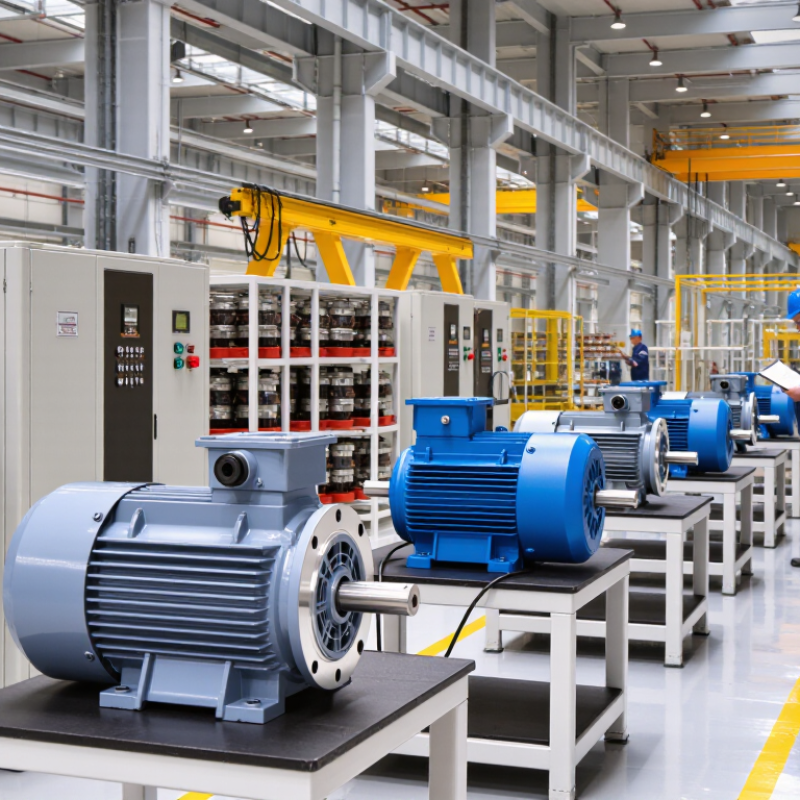
Top High Efficiency Motor Manufacturers in China

High-Efficiency Motors in China: IEC IE Classes and Core Technologies

Top High Efficiency Motor Manufacturers in China

High-Efficiency Motors in China: IEC IE Classes and Core Technologies

China’s motor manufacturers serve a wide range of industrial needs, from pumps and fans to production lines. Comparing models starts with the IEC efficiency classes: IE1, IE2, IE3, and IE4 indicate increasing efficiency under defined test conditions. A higher class can reduce energy use, but the real savings depend on operating hours, load, and installation. Small details matter.

Core technologies include precision-formed electrical steel, optimized stator windings, low-loss rotor designs, and improved cooling paths. These features help limit electrical and thermal losses. Variable-speed drives can also improve system efficiency when motor speed matches demand. However, motor and drive selection should be checked together; compatibility is not automatic. A neat IE label is useful, but it does not tell the whole story.

Tips: Request test data for the rated operating point, and compare efficiency at the loads your equipment actually uses. Check voltage, insulation, enclosure protection, and temperature-rise limits against site conditions. Ask how results were measured. Not always easy, but worth checking. A brief review of maintenance access and spare-part availability can prevent practical headaches later.

GB 18613-2020: Grade 3 Minimum Efficiency for 0.12–1,000 kW Motors

GB 18613-2020 sets Grade 3 as the minimum energy-efficiency level for motors within its specified 0.12–1,000 kW range. Grade 3 is a threshold, not a mark of exceptional efficiency. Higher grades indicate better efficiency, but buyers should confirm the standard’s scope for the specific motor type, power rating, and operating conditions. Small details matter. A motor’s rated voltage, frequency, pole count, and duty can affect whether a comparison is meaningful.

When assessing a Chinese manufacturer, request the efficiency value and test documentation for the exact model—not just a general catalogue claim. Check that the nameplate information matches the quotation and technical datasheet. For a production line running many hours, even a modest efficiency difference can influence electricity use over time. Still, the motor alone does not determine system performance; load matching, control settings, maintenance, and installation also matter. This distinction is easy to miss. Grade 3 compliance offers a useful baseline, yet it should not replace a careful review of operating costs and verified product data.

Leading Chinese Manufacturers by Motor Type, Power Range, and Application

China’s high-efficiency motor manufacturers often focus on distinct product types rather than covering every need equally. Induction motors serve pumps, fans, compressors, and general factory equipment. Permanent-magnet motors can suit systems needing high efficiency at variable speeds, while servo motors support precise positioning on packaging and machining lines. The right choice depends on operating conditions, not just a catalog rating. Details matter.

Power range is another useful way to compare suppliers. Small motors may drive compact appliances or conveyors, while larger units support water plants, mines, and heavy industrial systems. Ask manufacturers for efficiency figures across the expected load range, not only at one rated point. Request test records, temperature-rise data, and details about insulation and bearing options. A neat specification sheet is helpful, but it cannot show how a motor behaves in a dusty room or under frequent starts. That gap deserves attention. Match the motor’s duty cycle, speed control, and installation environment to the application, then confirm the supplier can provide consistent testing and after-sales technical support.

Comparing Manufacturers: IE3–IE5 Ratings, Test Standards, and Certifications

When comparing high-efficiency motor manufacturers in China, treat IE3, IE4, and IE5 as performance classes to verify, not marketing labels. Under IEC 60034-30-1, the applicable class depends on factors such as motor type, output, frequency, and pole count. A rating alone says little about performance at your operating point. Ask for the exact model’s efficiency test report, nameplate data, and test method. IEC 60034-2-1 describes recognized methods for measuring motor losses and efficiency. Small details matter. Check that the report matches the quoted voltage, frequency, cooling arrangement, and frame size.

Review certifications and test records for the destination market and the specific motor model. In China, ask how the claimed class relates to applicable requirements, including GB 18613 where relevant. For export orders, confirm that conformity documents cover the supplied configuration; CE documentation, for example, does not by itself prove a particular IE rating. Compare traceable test results, production quality records, and the manufacturer’s process for handling test deviations. Paperwork can look tidy. It can still leave gaps. I would ask who performed the test, when it was done, and whether the measured motor is the one being shipped.

Top High Efficiency Motor Manufacturers in China - Comparing Manufacturers: IE3–IE5 Ratings, Test Standards, and Certifications
Comparison area IE3 — Premium Efficiency IE4 — Super Premium Efficiency IE5 — Ultra-Premium Efficiency What to verify with each manufacturer
Efficiency classification Efficiency class defined by IEC 60034-30-1 for motors within the standard’s scope. A higher efficiency class than IE3 under IEC 60034-30-1. A higher efficiency class than IE4 under IEC 60034-30-1. Request the rated efficiency and the applicable standard for the exact motor model, output, pole count, frequency, and voltage.
Efficiency figures There is no single efficiency percentage for all IE3 motors; the required value depends on motor characteristics. There is no single efficiency percentage for all IE4 motors; compare like-for-like motor configurations. There is no single efficiency percentage for all IE5 motors; confirm the declared value for the specified configuration. Compare identical ratings and operating conditions. Do not compare class labels alone as if they were specific measured efficiency values.
Classification standard IEC 60034-30-1 specifies efficiency classes for covered line-operated AC motors. IEC 60034-30-1 specifies efficiency classes for covered line-operated AC motors. IEC 60034-30-1 specifies efficiency classes for covered line-operated AC motors. Check the standard edition and confirm that the motor’s design and operating conditions fall within its scope.
Efficiency test method IEC 60034-2-1 provides methods for determining losses and efficiency for covered AC machines. IEC 60034-2-1 provides methods for determining losses and efficiency for covered AC machines. IEC 60034-2-1 provides methods for determining losses and efficiency for covered AC machines. Ask for a model-specific test report identifying the test method, measured results, laboratory, and tested sample.
China energy-efficiency reference GB 18613-2020 is China’s national standard for minimum allowable energy-efficiency values and energy-efficiency grades for specified motors. GB 18613-2020 is China’s national standard for minimum allowable energy-efficiency values and energy-efficiency grades for specified motors. Check the applicable product scope and current Chinese requirements; an IEC class claim alone does not establish compliance with every domestic requirement. Request the applicable GB compliance documentation and verify that it covers the exact product type and rating.
Product certification IE class designation is not, by itself, proof of independent product certification. IE class designation is not, by itself, proof of independent product certification. IE class designation is not, by itself, proof of independent product certification. Verify certificate number, issuing body, validity, product model, and certification scope. Confirm whether CCC applies to the specific product.
Management-system credentials ISO 9001 can indicate a quality-management system; it does not certify an individual motor’s efficiency class. ISO 9001 can indicate a quality-management system; it does not certify an individual motor’s efficiency class. ISO 9001 can indicate a quality-management system; it does not certify an individual motor’s efficiency class. Check certificate validity, the certified facility, and the stated scope. Treat management-system certificates separately from product test evidence.
Supplier comparison evidence Model datasheet, nameplate details, efficiency test report, and applicable compliance documents. Model datasheet, nameplate details, efficiency test report, and applicable compliance documents. Model datasheet, nameplate details, efficiency test report, and applicable compliance documents. Compare verified documents for the same motor duty, output, speed, supply conditions, and intended application—not supplier-wide claims.

Comparison note: IE classes and regulatory requirements apply within defined scopes. Confirm the relevant standard edition, motor configuration, and current local requirements before selecting or specifying a motor.

Industrial Uses and Selection: 50 Hz Supply, Load Profile, and Lifecycle Cost

Top High Efficiency Motor Manufacturers in China

Industrial Uses and Selection: 50 Hz Supply, Load Profile, and Lifecycle Cost

For pumps, fans, and conveyors, motor selection starts with the actual operating conditions. China’s industrial supply is generally 50 Hz, but confirm voltage, frequency, and required shaft speed on the equipment nameplate. A four-pole induction motor runs near 1,500 rpm synchronously at 50 Hz; its loaded speed is lower because of slip. Small details matter.

The IEA’s 2011 report, Energy-Efficiency Policy Opportunities for Electric Motor-Driven Systems, estimated that motor-driven systems consume about 46% of global electricity. That scale makes efficiency more than a purchase specification. Compare IEC 60034-30-1 efficiency classes at the same output, pole count, and frequency. Then examine the load profile: a pump running steadily differs from a conveyor with frequent starts. Variable-speed control can help some applications, but it is not automatically the best fit.

Lifecycle cost should include electricity, maintenance, downtime, and the initial price. The U.S. Department of Energy’s 2014 motor-systems assessment reported that motor-driven systems accounted for roughly 68% of electricity use in U.S. manufacturing. That figure is not a forecast for every Chinese plant, but it signals why operating hours matter. A simple spreadsheet helps, though it may miss seasonal demand or real maintenance conditions. Check those assumptions against measured site data before choosing.

FAQS

What does Grade 3 mean under GB 18613-2020?

It is the minimum efficiency level for covered motors rated from 0.12 to 1,000 kW. It is a baseline, not a sign of exceptional efficiency.

What details should I check before comparing motor efficiency?

Compare the exact model, rated voltage, frequency, pole count, and duty. Small details matter. A catalogue figure alone may not tell the whole story.

What documents should I request from a manufacturer?

Ask for the exact model’s efficiency value and test records. Check that the nameplate matches the quotation and technical datasheet. A general claim is not enough.

Which motor type suits pumps, conveyors, or precise positioning?

Induction motors commonly serve pumps, fans, and conveyors. Permanent-magnet motors may suit variable-speed systems, while servo motors support precise positioning. The application decides.

What should I know about 50 Hz motor speed?

Confirm frequency, voltage, and shaft speed against the equipment nameplate. A four-pole motor has a synchronous speed near 1,500 rpm at 50 Hz. Loaded speed is lower because of slip.

How should I compare motors for changing loads?

Review efficiency across the expected load range, not just at one rated point. A steady pump and a frequently starting conveyor behave differently. I might still miss a seasonal change.

Does variable-speed control always improve efficiency?

No. It can help some applications, but the right choice depends on load and operating conditions. Check the actual system.

What belongs in a motor’s lifecycle cost?

Include electricity, maintenance, downtime, and purchase price. Operating hours matter. A spreadsheet helps, but measured site data can reveal assumptions it misses.

Conclusion

China’s high-efficiency motor sector covers a wide range of designs for industrial and commercial applications. This overview explains how IEC efficiency classes distinguish motor performance and how core technologies—such as improved electromagnetic design, optimized materials, and reduced mechanical losses—can support energy savings. It also introduces GB 18613-2020, which sets Grade 3 as the minimum efficiency level for applicable motors rated from 0.12 to 1,000 kW, providing a national benchmark for selection and compliance.

Rather than focusing on individual brands, the article compares Chinese manufacturers by motor type, power range, and intended application. It outlines how to assess IE3, IE4, and IE5 ratings alongside test methods, certifications, and operating requirements. For practical selection, buyers should consider compatibility with a 50 Hz supply, the load profile, operating hours, and maintenance needs. Evaluating total lifecycle cost—not just purchase price—helps identify a High Efficiency Motor that can deliver dependable performance and long-term energy savings.

Isabella

Isabella

Isabella is a dedicated marketing professional with a sharp focus on driving brand growth and engagement through strategic content creation. With an extensive background in digital marketing, she combines her passion for storytelling with her keen understanding of industry trends to deliver......