What Are the Top Motor Controller Manufacturers?

Time:2026-11-24 Author:Ethan
0%

Choosing a Motor Controller manufacturer is not simply a search for the biggest brand name. The right choice depends on the machine, power level, operating environment, and control requirements. A controller for a compact mobile robot faces different demands from one driving a factory conveyor or HVAC system. That difference matters.

Well-known suppliers include ABB, Siemens, Schneider Electric, Rockwell Automation, Danfoss, Yaskawa, and Mitsubishi Electric. Their product ranges, regional availability, and application strengths vary, so a brand name alone cannot establish the best fit. Buyers should compare rated voltage and current, speed and torque control, thermal limits, protection features, communication options, and support. Check the datasheet against the actual motor and load—not just the headline rating. A cabinet that runs cool during a short test may overheat during a long production shift.

This guide introduces leading manufacturers and the factors that distinguish their offerings. It also considers practical questions: Is configuration straightforward? Are replacement units and technical help accessible? Does the controller suit the required duty cycle? These details can affect installation time and long-term reliability. No shortlist is perfect. Product lines change, and performance depends on system design, installation, and maintenance. Treat manufacturer comparisons as a starting point, then verify specifications and service terms for the exact model you plan to use.
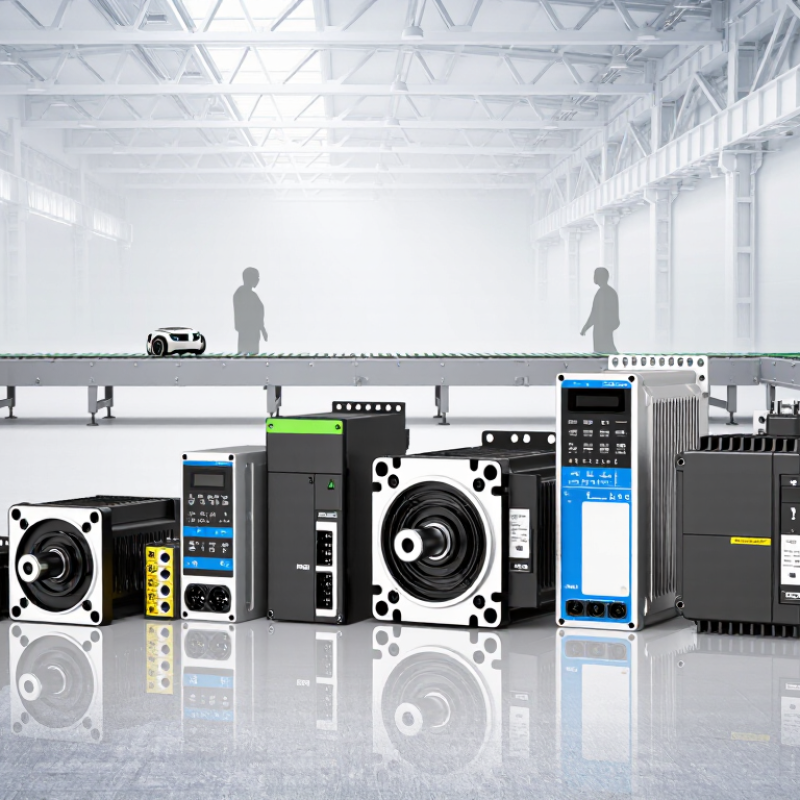
What Are the Top Motor Controller Manufacturers?

Understanding Motor Controllers and Their Main Applications

What Are the Top Motor Controller Manufacturers?

Understanding Motor Controllers and Their Main Applications

A motor controller manages how an electric motor starts, runs, and stops. It adjusts electrical power to control speed, torque, and direction. In a workshop, that might mean a conveyor starting smoothly instead of jerking under load. Variable-frequency drives commonly control AC motors in pumps, fans, and HVAC equipment. Other controllers serve robotics, household appliances, and electric vehicles. The right design depends on the motor, operating conditions, and required precision.

Demand is growing in transport. The International Energy Agency’s Global EV Outlook 2024 reports nearly 14 million electric cars were sold worldwide in 2023, about 18% of new car sales. Each electric vehicle relies on power electronics to manage motor operation. That figure shows the scale of one important application, but it does not measure motor-controller sales directly. Industrial applications also matter, though their needs differ: a pump may prioritize steady operation, while a robot needs precise, rapid movement. Specifying a controller can be less straightforward than it looks.

Tips: Match the controller to the motor’s voltage, current, and duty cycle. Check heat, dust, and vibration at the installation site. Leave room for adjustment; real operating loads may differ from estimates.

Key Factors for Evaluating Motor Controller Manufacturers

What Are the Top Motor Controller Manufacturers?

Key Factors for Evaluating Motor Controller Manufacturers

A capable manufacturer starts with a clear understanding of the motor and its working environment. Share the motor type, supply voltage, peak current, speed range, and expected duty cycle. A controller sized only for average current may overheat during repeated acceleration. Ask for ratings under realistic operating conditions, not just headline figures.

Thermal performance deserves close attention. Request temperature-rise data, cooling requirements, and test conditions. Check how the controller responds to overcurrent, undervoltage, and excessive temperature. Protection features matter most when they behave predictably. Ask what fault information the unit records and how technicians can retrieve it. Small details count.

Compare communication options, control accuracy, and integration documentation against your system requirements. Wiring diagrams, connector details, and configuration instructions should be specific and current. Ask whether sample units can be tested with your motor before committing to production. No checklist is perfect. A polished datasheet can still leave gaps, and I would not treat a quick bench test as proof of long-term reliability. Review quality controls, component traceability, warranty terms, and technical support response times. Then consider whether the supplier can maintain consistent performance across the quantities and delivery schedule your project needs.

What Are the Top Motor Controller Manufacturers? - Key Factors for Evaluating Motor Controller Manufacturers

Evaluation Factor What to Assess Evidence to Request or Verify Why It Matters
Motor compatibility Supported motor types, such as brushed DC, brushless DC, induction, or permanent-magnet synchronous motors; phase count and feedback requirements. Product specifications, supported motor and encoder lists, and a test using the intended motor. A controller must match the motor’s electrical characteristics and commutation or control method.
Voltage and current ratings Operating voltage range, continuous and peak current, overload duration, and any derating at elevated temperature or altitude. Datasheet rating conditions, thermal derating curves, and application-specific sizing guidance. Matching ratings to the actual load helps avoid nuisance trips, overheating, and premature failure.
Control performance Available control modes, speed and torque regulation, response, low-speed operation, and positioning functions where applicable. Published performance specifications and test results under defined motor, load, and feedback conditions. The required accuracy and dynamic response depend on the machine and its operating profile.
Protection and diagnostics Protection features such as overcurrent, overvoltage, undervoltage, overtemperature, and fault reporting; confirm which protections are built in and which require external components. User manuals, fault-code documentation, protection thresholds, and system-level safety documentation. Clear protection behavior can reduce equipment damage and make troubleshooting faster.
Thermal and environmental suitability Operating temperature, cooling method, enclosure rating, vibration limits, and installation clearances. Environmental specifications, installation instructions, and thermal test conditions for the intended enclosure and duty cycle. The installation environment and heat dissipation affect dependable operation and service life.
Communications and integration Available interfaces and protocols, command and feedback data, configuration tools, and compatibility with the intended control system. Protocol documentation, interface specifications, software access, and an integration test with the target system. Well-documented interfaces simplify commissioning, monitoring, and maintenance.
Safety and regulatory documentation Applicable product approvals and documentation for the destination market and end application. Drive-system safety standards may include IEC 61800-5-1. Current certificates or declarations, their scope, test reports where available, and installation conditions for compliance. Requirements vary by product, application, and market; verify the specific controller and its intended use.
Electromagnetic compatibility Emissions and immunity performance, wiring and grounding requirements, and any need for filters or shielded cables. IEC 61800-3 addresses EMC for adjustable-speed power drive systems. EMC test documentation and the installation configuration under which results were obtained. Installation details can affect EMC performance, so product claims should be checked against the actual system setup.
Efficiency and energy data Efficiency information across relevant operating points and the method used to report drive-system losses. Test conditions and efficiency data; IEC 61800-9-2 provides methods and indicators for power drive system energy efficiency. Comparisons are meaningful only when operating points and measurement methods are comparable.
Customization and engineering support Availability of configuration assistance, application engineering, firmware options, and support for integration or product changes. Support scope, response process, technical documentation, and a clear process for validating custom requirements. Technical support can help resolve motor matching, tuning, and integration issues.
Reliability and lifecycle support Warranty terms, repair or replacement process, product change notifications, and availability of spare units and documentation. Published warranty conditions, lifecycle policies, service arrangements, and traceable quality documentation. Lifecycle planning helps manage maintenance, repairs, and product transitions over the equipment’s service period.

Evaluation note: Compare controllers using the same motor, load profile, environmental conditions, and test method. Standards and approvals should be verified for the specific product and application.

Leading Motor Controller Manufacturers and Their Product Ranges

Motor controller manufacturers usually cover several product families, not one universal solution. Their ranges commonly include variable-frequency drives for pumps and fans, servo drives for precise positioning, and brushless DC controllers for compact equipment. Larger portfolios may also include medium-voltage drives, regenerative units, and integrated motor-drive packages. The differences matter on a factory floor: a conveyor may need steady torque at low speed, while a packaging axis needs rapid, repeatable positioning. Not always an easy comparison.

The International Energy Agency’s 2011 report, Energy-Efficiency Policy Opportunities for Electric Motor-Driven Systems, estimated that motor-driven systems use about 46% of global electricity. That figure is broad and dated, but it explains why efficiency ratings, control modes, and installation support deserve attention alongside price. For electric mobility, the IEA’s Global EV Outlook 2024 reported nearly 14 million electric car sales in 2023, around 18% of worldwide car sales. This growth has raised demand for traction controllers designed to coordinate motor torque, battery power, and thermal limits.

When comparing suppliers, check rated voltage, continuous and peak current, feedback options, enclosure protection, and compatible motor types. Ask whether software tools, commissioning guidance, and replacement parts are available for the intended service life. Product sheets can look similar; operating conditions rarely are. A controller’s real suitability depends on load profile, cooling, and the skills of the maintenance team. Some specifications still leave room for interpretation.

How Manufacturers Differ by Technology, Industry, and Market Focus

Motor controller manufacturers differ less by catalog size than by the problems their products are built to solve. Some prioritize precise torque control, fast response, and compact power electronics. Others emphasize rugged housings, simple commissioning, or long service life. Their engineering choices affect performance under real loads, not just headline ratings.

Industry needs shape those choices. Factory automation may require smooth low-speed operation, encoder feedback, and communication with a larger control system. Electric vehicles and mobile equipment often place greater weight on vibration resistance, thermal management, and efficient use of battery power. A controller mounted beside a warm motor faces different cooling challenges from one installed in a ventilated cabinet. Small details matter.

Market focus also changes what manufacturers provide. A supplier serving large production lines may offer extensive configuration options and application engineering. A supplier targeting smaller equipment makers may favor straightforward setup and readily available documentation. Look closely at continuous current, peak current duration, protection features, and operating temperature. Ask how faults are diagnosed. A clear fault log can save hours on a noisy factory floor.

The comparison is not perfectly tidy. A polished datasheet cannot show every installation challenge, and support quality can vary by region. That is worth checking. Match the controller to the motor, load cycle, environment, and available service—not simply the highest power rating.

Choosing a Motor Controller Manufacturer for a Specific Application

Choosing a motor controller manufacturer starts with the load, not a catalogue’s largest current rating. A small pump, for example, may need stable low-speed torque, while a conveyor needs predictable starts under changing loads. The IEA’s 2016 report, Energy-Efficiency Policy Opportunities for Electric Motor-Driven Systems, estimated these systems consume about 53% of global electricity. That figure describes whole systems, not guaranteed savings from one controller.

Match the controller to motor type, supply voltage, continuous and peak current, speed range, and cooling conditions. Check what happens inside a sealed cabinet on a hot production floor. The U.S. Department of Energy’s Improving Motor and Drive System Performance sourcebook recommends assessing the motor, drive, driven equipment, and operating profile as a system. Ask manufacturers for test conditions behind efficiency and thermal ratings. A peak-current number alone tells little.

Look beyond the specification sheet. Confirm feedback compatibility, communication options, fault logging, documentation, and technical support for commissioning. Request evidence from an application close to yours, including load changes and ambient temperature. Then compare lifecycle costs, not just unit prices. Small detail, big consequence. A clean laboratory test may not reflect dust, vibration, or frequent starts. Supplier comparisons are imperfect, too; published data can use different test setups. Note those gaps before choosing, and make the trade-offs explicit.

What Are the Top Motor Controller Manufacturers? Choosing a Motor Controller Manufacturer for a Specific Application

Three-phase reference waveforms are a useful starting point when assessing whether a motor controller supports the control approach required by an application.

The curves show ideal normalized phase references, separated by 120 electrical degrees; they are mathematical reference signals, not measured output from a specific controller. When evaluating manufacturers, check support for the required motor type, control method, voltage, current, feedback, and operating environment.

FAQS

What information should I share when requesting a motor controller?

Provide the motor type, supply voltage, peak current, speed range, and duty cycle. Describe the load and operating environment, too. Repeated acceleration can overheat a controller sized only for average current.

Which thermal and protection details should I check?

Ask for temperature-rise data, cooling requirements, and test conditions. Check responses to overcurrent, undervoltage, and excessive temperature. Ask how technicians retrieve fault records. Small details count.

What controller types suit different applications?

Variable-frequency drives often serve pumps and fans. Servo drives support precise positioning, while brushless DC controllers suit compact equipment. A conveyor and a packaging axis may need very different control behavior.

How can I match a controller to its application?

Start with the load, not the largest current rating. A pump may need stable low-speed torque; a conveyor may need reliable starts under changing loads. Check cooling and ambient temperature.

Is a peak-current rating enough to judge a controller?

No. Peak current alone says little about real performance. Also check continuous current, motor compatibility, feedback options, and test conditions. A sealed cabinet can become surprisingly hot.

Should I test a sample controller before production?

Yes, if possible, test it with your motor and realistic loads. Include frequent starts or changing loads when relevant. A quick bench test is not proof of long-term reliability.

What documentation and support should I look for?

Request current wiring diagrams, connector details, and configuration instructions. Check commissioning help, replacement parts, fault logging, and support response times. Vague instructions slow real work.

How should I compare suppliers beyond the purchase price?

Compare warranty terms, quality controls, component traceability, delivery consistency, and lifecycle costs. Published tests may use different setups. A neat datasheet can still miss the messy part.

Conclusion

A Motor Controller regulates a motor’s speed, torque, direction, and overall operation. Controllers are used across applications such as industrial machinery, vehicles, robotics, appliances, and renewable energy systems. Their designs vary according to motor type, power requirements, operating environment, and the level of precision needed. Understanding these fundamentals helps clarify why manufacturers offer different technologies and product ranges for distinct uses.

When comparing manufacturers, consider product performance, reliability, efficiency, safety features, customization options, technical support, and long-term availability. Manufacturers may specialize in particular motor technologies, industries, or market segments, so the leading choice depends on the application rather than a single universal ranking. Match the controller’s capabilities to the motor and its working conditions, while also evaluating integration needs, installation requirements, and lifecycle costs. This approach helps identify a suitable manufacturer and controller for dependable, efficient operation.

Ethan

Ethan

Ethan is a seasoned marketing professional with a deep expertise in our company's innovative product line. With a passion for sharing knowledge and insights, he takes the lead in regularly updating our corporate blog, where he explores industry trends, product features, and effective marketing......