As industries increasingly rely on automation, selecting the right components is crucial. Step motors are at the forefront of this shift. Their precision and reliability make them essential in various applications, from robotics to CNC machinery. According to a market research report by Research and Markets, the step motor market is expected to grow at a compound annual growth rate of 5.9% from 2020 to 2026.
Expert in motion control systems, Dr. Jane Thompson, emphasizes the significance of quality in step motors. She states, “The right step motor can be the determining factor between success and failure in a project.” As projects become more complex, understanding various motor brands and their unique features is vital. Choosing the wrong step motor may lead to inefficiencies and increased costs.
Navigating through numerous options can be daunting. Each brand offers different specifications, making selection challenging. While some motors boast high torque, others excel in energy efficiency. It’s essential to weigh these aspects carefully. Exploration of top motor brands can enhance your project's performance and reliability in the long term. Choosing wisely will ensure a successful implementation.
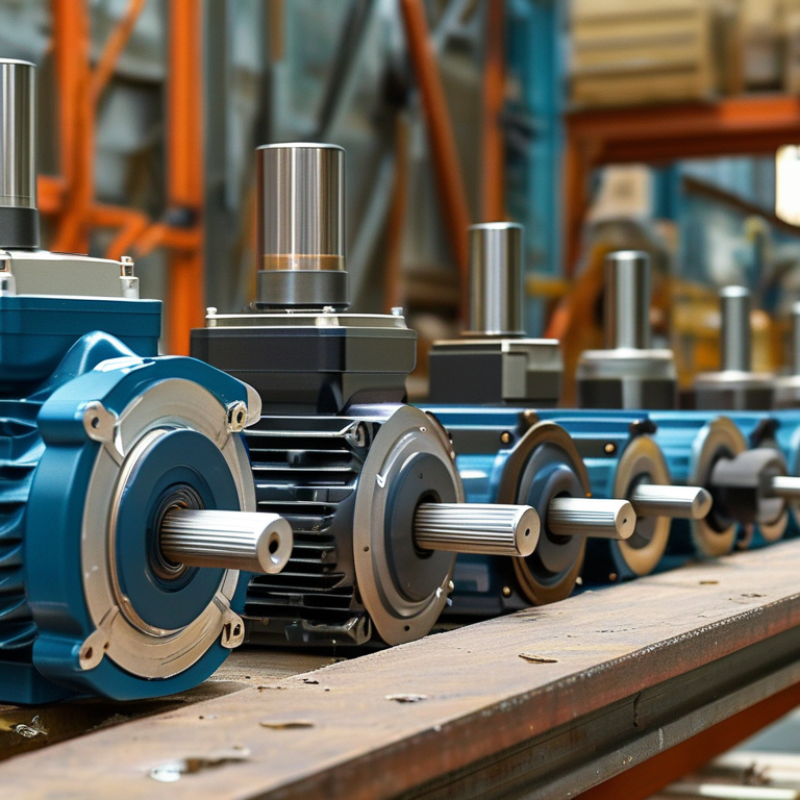
Overview of Step Motors and Their Applications
Step motors are widely used in various applications, including robotics, CNC machines, and 3D printing. Their ability to move precisely makes them ideal for tasks that require accuracy. Unlike traditional motors, step motors divide a full rotation into equal steps. This allows for controlled and repeatable motion. Various projects can greatly benefit from their unique capabilities.
When selecting a step motor, consider several factors. First, know your application's torque requirements. Different projects demand varying levels of strength. Then, assess the desired speed and precision. Some motors excel in specific ranges, impacting performance. Lastly, size and weight can be crucial for compact designs.
Tip: Always test your motor in a real-world scenario before finalizing your decision. Prototyping helps observe any unsatisfactory performance. Reflect on its interplay with your project. Keep in mind that even a small miscalculation can lead to complications.
Moreover, consider the environment your motor will operate in. Heat and dust can affect performance. Think about implementing protective measures if necessary. Make adjustments based on real-world feedback. These reflections can significantly enhance your project outcomes.
Top 5 Step Motor Brands for Your Next Project
| Motor Type |
Torque (Nm) |
Step Angle (degrees) |
Maximum RPM |
Voltage (V) |
Applications |
| NEMA 17 |
0.5 |
1.8 |
1000 |
12 |
3D Printers, CNC Machines |
| NEMA 23 |
1.2 |
1.8 |
600 |
24 |
Automated Equipment, Robotics |
| NEMA 34 |
3.0 |
1.8 |
300 |
48 |
CNC Machining, Large Scale Applications |
| Hybrid Stepper |
1.0 |
0.9 |
1200 |
36 |
Textile Machinery, Packaging |
| Permanent Magnet Stepper |
0.4 |
1.8 |
800 |
24 |
Medical Equipment, Automated Test Equipment |
Key Features to Consider When Choosing a Step Motor
When selecting a step motor for your next project, several key features warrant careful consideration.
Precision is paramount. A motor's step angle directly impacts its resolution. Common step angles are 1.8° and 0.9°.
Using a motor with a smaller step angle enhances positioning accuracy but may complicate the control system.
Torque is another crucial factor. Step motors generate holding torque, which is vital for maintaining position under load.
According to industry reports, motors with higher torque ratings provide better performance in demanding applications.
However, realize that increased torque often leads to more heat generation. Heat management becomes essential to avoid performance degradation.
Consider the motor's driver compatibility as well. Not all drivers function seamlessly with every motor.
Compatibility issues can lead to inefficiencies and reduced performance. Performance data indicates that mismatched drivers may result in inconsistent motion control.
Take note of the control strategy as well; varying applications may require different modes like constant current or microstepping, impacting smoothness and responsiveness.
Understanding these intricacies is vital for optimal performance in any project.
Top 5 Step Motor Brands: A Comprehensive Review
When selecting a step motor for your next project, understanding the market landscape is essential. The step motor industry is projected to grow at a CAGR of 6.7% through 2027, driven by advancements in automation. Robust performance, reliability, and precision are key factors in selecting a manufacturer. A report from a prominent engineering organization notes that well-engineered step motors can provide up to 200% more torque and better energy efficiency than standard models.
The top players in the market emphasize innovation and quality. These brands focus on minimizing backlash and improving resolution. Engineers often report varying experiences when using different brands. Some motors offer exceptional accuracy but may have thermal issues, while others excel in heat dissipation but fall short in precision. Real-world tests reveal that environmental factors can significantly impact performance.
An industry survey indicated that 72% of professionals prioritize customer support when choosing a motor brand. Users frequently discuss the importance of availability of technical resources and documentation. The feedback loop is critical; many engineers express dissatisfaction when they cannot access timely assistance or spare parts. These insights highlight the need for careful evaluation before making a purchasing decision.
Comparative Analysis of Step Motor Brands for Different Projects
When choosing a step motor for your project, understanding specific requirements is crucial. Different applications demand varying torque, speed, and precision. For example, a robotics project might require high torque at low speeds, while an automated system may prioritize faster movements. Each project presents unique challenges, and knowing the nuances helps significantly.
Analyzing the features of various step motor brands reveals critical differences. One brand might excel in torque output, making it suitable for heavy-duty tasks. In contrast, another brand could be designed for precise movements, ideal for CNC machines. Failure to match a motor's specifications to your project's needs can hinder performance. That being said, some users find it challenging to navigate technical jargon and specifications.
Moreover, reliability plays a significant role in your choice. Some motors might offer impressive specs but can fall short in long-term performance. It's essential to read user reviews and technical evaluations. Refining your selection process involves more than just specs; understanding application nuances and real-world usage is key. Every project is an opportunity to learn, and reflecting on previous experiences can guide better choices.
Expert Recommendations and Additional Resources for Step Motors
When selecting step motors for your project, expert recommendations play a vital role in ensuring your choice meets the performance requirements. According to industry reports, step motors have a high demand in automation, robotics, and CNC applications. Their precision and reliability make them favorable for controlling position and speed. However, not all step motors are created equal. Research indicates that while most offer similar torque, the efficiency varies greatly.
Tip: Always check the motor’s holding torque and compare it across different brands. This can greatly influence performance in your application. Additionally, consider the thermal management of your step motor. Overheating can lead to a drop in performance and longevity.
One common oversight is neglecting the driver compatibility. A good driver will enhance the motor's performance, adapting to various loads and providing smooth operation. Data shows that motors paired with quality drivers can experience up to a 20% increase in efficiency. Don't hesitate to consult technical datasheets or reach out to experts for guidance. Reliable resources are available that detail the specifications needed for successful project execution.
FAQS
: Step motors are commonly used in robotics, CNC machines, and 3D printing for precise motion control.
Step motors divide a full rotation into equal steps, allowing for controlled and repeatable movement.
Consider torque requirements, desired speed, precision, size, and weight for your specific application.
Prototyping helps identify performance issues. Testing in real-world scenarios can lead to better decisions.
Heat and dust can impact operation. Implementing protective measures can enhance longevity and performance.
Take time to understand the specifications. Reflect on past projects for better insight into your needs.
A reliable motor ensures consistent performance over time. User reviews can provide insight into long-term durability.
Even small miscalculations can lead to significant complications in your project. Careful selection is essential.
Go beyond specs by considering application nuances and user feedback. Learning from past experiences helps.
Adjustments based on real-world feedback can enhance results. Reflect on your project's unique challenges and needs.
Conclusion
This article provides a comprehensive guide to step motors, highlighting their essential features and various applications. It begins with an overview of step motors, explaining their function in precision control systems across industries like robotics, automation, and CNC machinery. Key features to consider when selecting a step motor include torque, speed, and accuracy, which are critical for ensuring optimal performance in different projects.
The article goes on to present a detailed review of the top 5 step motor brands, analyzing their strengths and weaknesses to help users make informed decisions. A comparative analysis further breaks down how each brand performs under various project requirements, ensuring that readers can find the ideal step motor for their specific needs. Finally, expert recommendations and additional resources are provided to offer further insights into maximizing the benefits of step motors in upcoming projects.
 Strata Motor
